





On 21 July 2025, Lineas narrowly avoided collapse thanks to an emergency loan of 61 million euros granted by the Belgian federal government. The measure, channelled through the state-owned investment fund SFPIM and convertible into equity, could result in the state becoming the majority shareholder. This represents yet another attempt to save a company that, despite its strategic relevance to both national and European logistics, has struggled for years to achieve financial stability.
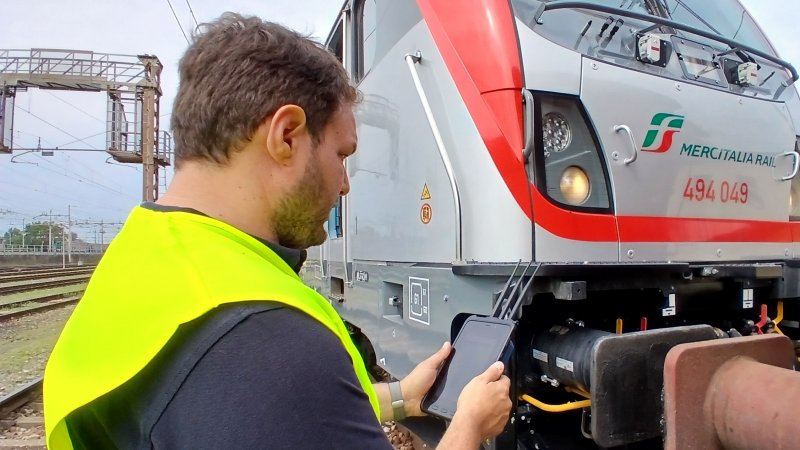
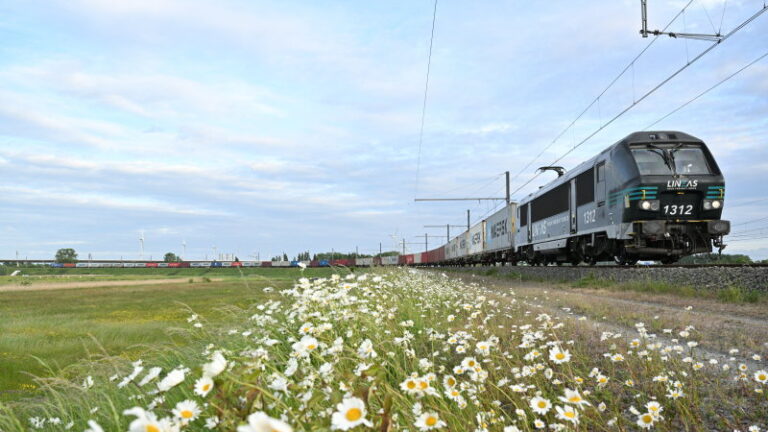
Lineas was created in 2011 following the spin-off of SNCB’s freight operations and partially privatised in 2015, when the French investment fund Argos Wityu acquired a 54 percent stake. The remaining 46 percent remained in public hands. The goal was to shift a growing share of freight transport from road to rail, reducing CO2 emissions and relieving pressure on road infrastructure. Operationally, the company handles between 35 and 50 percent of Belgium’s rail freight, employs over 1,500 people, and manages a fleet of 250 locomotives and 6,700 wagons. But its financial performance tells a different story.
After posting a single year of profit in 2018, Lineas has since accumulated losses approaching half a billion euros. The worst year was 2022, with a deficit of 229 million. A restructuring plan launched in 2023 offered a glimmer of hope. The company’s finances improved, with the loss cut to 40 million and then further reduced to 13.6 million in 2024. The turnaround was driven by service rationalisation, including the closure of unprofitable routes, renegotiation of contracts with major clients in sectors such as steel, chemicals and automotive, and a recapitalisation of 84 million euros, partly in cash and partly through debt-to-equity conversion.
However, the liquidity crisis has not been fully resolved. The company was on the brink of bankruptcy and the government decided to step in once more, this time with a conditional loan. The authorities now require Lineas to break even by 2026, protect jobs – especially the 1,300 frontline workers – and secure a third private investor willing to inject at least 100 million euros. Failing that, the risk is that the company could become a permanent public liability. Meanwhile, tensions with the trade unions persist, largely due to the divide between staff on legacy SNCB contracts and those hired directly by Lineas, an anomaly that continues to fuel discontent and strike threats.
Erik Van Ockenburg, a manager with international experience at McKinsey, Sonaca and ADB Safegate, has been appointed to lead this new phase as CEO, a position he took up last May. His mandate is to complete the industrial transformation and enhance the company’s financial appeal. Among his first actions are the expansion of the Green Xpress network, which now links 25 European hubs, including the launch of a new Ghent–Milan route in July, and the strengthening of connections between Zeebrugge and Antwerp in partnership with PSA, with an expected volume of 26,000 containers per year.
Lineas has also extended its leasing contract with Akiem until 2030 for 39 locomotives, enabling operations on both electrified and diesel routes. Investments in digitalisation are under way to improve train punctuality and boost customer satisfaction, while on the environmental front, the company aims to progressively replace diesel engines with hybrid or fully electric technology. Lineas is also lobbying politically for the continuation of infrastructure access fee discounts and for the introduction of mechanisms to make rail freight more competitive than road haulage.
The future remains uncertain. The base scenario projects a return to financial equilibrium in 2026 and a possible profit in 2027, provided that Europe’s industrial economy remains stable and public support continues. Under a more optimistic outlook, the entry of a logistics or port partner – potentially a major terminal operator from Antwerp – before the end of the year could accelerate recovery, leading to a positive operating result as early as the fourth quarter of 2025. But the risk of a negative scenario is far from negligible. A new industrial recession, a surge in fixed costs or a worsening of labour disputes could derail the recovery, necessitating further public funding or even resulting in full nationalisation of the company.