





The date marks the end of Nikola's journey, one of the first companies in the United States to design and manufacture electric industrial vehicles. Following a year plagued by financial difficulties, the company has filed for bankruptcy under Chapter 11 proceedings and will now seek to sell its assets, including its electric truck technologies. The document submitted to the Delaware Court reveals debts amounting to $98 million. Until the last moment, the company sought investors, but none materialised.
Yet, commercially, things were not going so badly. The company reported receiving 72 orders for its hydrogen model in the second quarter of 2024, a figure that rose to 88 units in the third quarter. Nikola also expanded its dealer network and its Hyla hydrogen refuelling infrastructure. However, an earlier incident involving fires in some of its battery-powered trucks led to a suspension of sales and inflicted reputational damage.
According to analysts, Nikola's bankruptcy stems from several factors. With demand still limited, the company faced extremely high costs for designing and manufacturing its vehicles, rapidly depleting the funds it had raised. There were also leadership issues, with frequent management changes and the fraud conviction of founder Trevor Milton. Although Milton was no longer with the company at the time, his conviction further undermined Nikola's reputation.
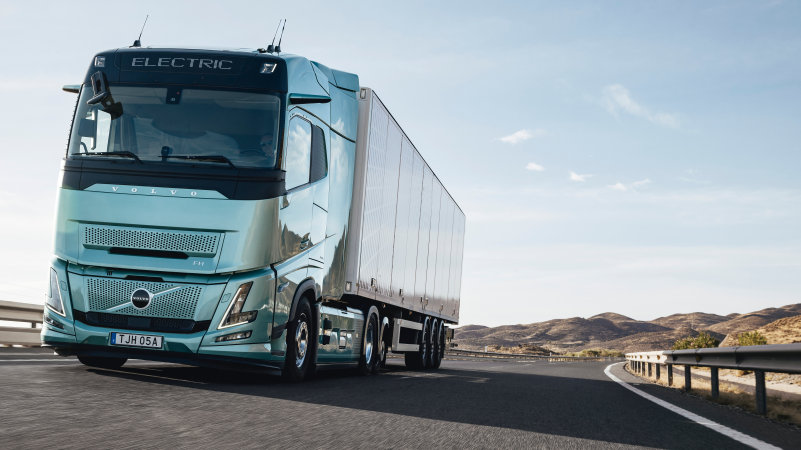
Nikola also pursued strategic alliances. In 2019, it established a close partnership with Iveco to develop electric trucks for the American and European markets, including a joint venture focused on fuel cell and battery-powered trucks. In 2021, the two companies began small-scale production of the Nikola Tre at the Ulm plant, a battery-electric tractor unit that used an Iveco cab and was delivered to a select group of customers in the United States. At the IAA 2022 in Hanover, they announced the sale of the battery-powered Nikola Tre and unveiled a hydrogen prototype. However, the following year saw an amicable separation, with Nikola continuing its activities in the United States while Iveco took full ownership of the European joint venture, which remains operational in Ulm.