



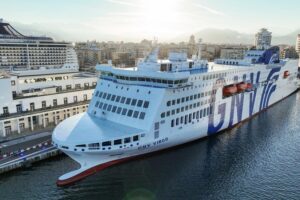
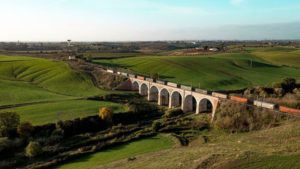
There is a goods handling model that sees Italian terminals playing a leading role. This is the Fast Corridor formula, namely the transfer of customs operations from a maritime port of entry to an inland terminal. These are goods, particularly in containers, that come from non-EU countries and must pass through customs, an operation that often causes time delays and congestion in ports. With fast corridors, goods can be transhipped from ships to trains and reach an inland terminal directly for customs clearance.
The Fast Corridor formula is being viewed with increasing interest by European operators since in Italy, without holding particular exclusives, it has experienced significant development with widely recognised positive results. The port of La Spezia led the way, having now established numerous connections with various inland terminals, specifically Bologna, Marzaglia, Melzo, Padova, Rivalta Scrivia, Rubiera and Segrate.
The example of the La Spezia port has been followed by other Ligurian terminals such as Genova Voltri with connections to Melzo and Rivalta Scrivia, Genova Pra' with Padova and Rubiera, Vado Ligure and Savona with Rivalta Scrivia. In the south, we have Gioia Tauro connecting to the terminals of Bari, Bologna and Padova. Ravenna is also a protagonist with Marzaglia. All these services therefore operate within national boundaries, but opportunities are also opening up across borders: for example, Trieste in collaboration with Rail Cargo Group has launched a connection with the Villach Sud terminal in Austria.
The Fast Corridor model could offer new opportunities for freight transport by enhancing the partnership between ports and railway, especially if it manages to extend its scope to more EU countries that could find an interesting outlet in Italian ports. This is also because there are numerous benefits linked to fast corridors. The Customs Agency lists them in detail: decongestion of port areas; reduction of container dwell time in ports, with consequent cost savings; reduction of journey times; greater security, thanks to the combination of documentary controls and physical monitoring of goods flows; digitalisation of the process; possibility for companies to integrate customs procedures with their own corporate logistics procedures.
The Customs Agency also oversees the control of goods movement. In particular, both the departure and destination operators must hold AEO qualification, that is authorised economic operator status, and the railway connection between the port terminal and the destination logistics terminal must be continuous and kept under control.
Piermario Curti Sacchi