




Ravenna port throughput
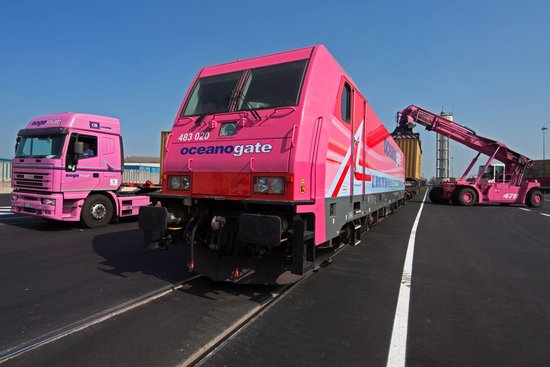
Between January and October 2025 the port of Ravenna handled 22,913,982 tonnes of cargo, an increase of 8.0% compared with the same period in 2024, with 2,204 ship calls, up 2.8%. Overall growth was driven by solid bulk and especially by liquid products, which reached 5,004,799 tonnes, up 25.4%. In the container segment throughput totalled 1,973,366 tonnes, an increase of 5.3%, and 176,682 teu, also up 5.3%, while containership calls reached 382, one fewer than in 2024. Ro-ro traffic contracted: rolling cargo amounted to 1,413,890 tonnes, down 6.1%, with 68,890 units, a drop of 14.0%, mirroring the decline on the Ravenna–Brindisi–Catania service, which moved 57,747 trailers, down 1.9%. Early estimates for November 2025 indicate containerised cargo is rising by 18.1%, while rolling cargo remains slightly weaker at minus 2.4%. For the eleven months the forecast points to more than 195,000 teu, an increase of 6.2%, and a 6.4% rise in containerised cargo, against roughly 1.6 million tonnes of ro-ro traffic, down 5.7%.
Barcelona southern rail hub
The approval at the end of November 2025 of the Urban Development Plan by the Catalan Generalitat clears the way for a €265 million programme to build the new southern rail hub at the port of Barcelona, designed to strengthen intermodality and reduce truck traffic and emissions. The project completely reorganises rail infrastructure in the southern area, creating an intermodal hub connected to the Mediterranean Corridor across roughly 130–131 hectares serving the port and the industrial districts of Zona Franca, Polígon Pratenc and Baix Llobregat. The hub will include six terminals, two already in operation and four new ones, among them the Terminal Nou Llobregat, the rolling motorway terminal and two handling sites in the former Llobregat riverbed. Planned investment comprises around €70 million for the Terminal Nou Llobregat, approximately €150 million for the new terminals in the riverbed, about €45 million for complementary works and some €26 million for green areas and ecological corridors. The hub aims to increase rail’s modal share after preventing 155,000 truck trips in 2024, targeting around 12% of containers and 45% of vehicles on rail by the end of 2025. Once fully operational the infrastructure will be able to handle up to 640,000 containers and 46,000 semi-trailers per year, helping to cut CO2 emissions and congestion. Approval of the plan unlocks the start of works, which must be coordinated with the new rail accesses to the port expected around 2032, while management will take place through public tender concessions. The Terminal Nou Llobregat will be developed and operated by Train Port Barcelona.
Poland–Ukraine rail corridor
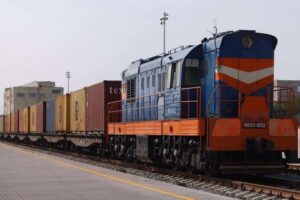
A new intermodal link between the port of Gdańsk and several Ukrainian terminals, operated by Laude Smart Intermodal and Loconi Intermodal for Maersk containers under a multi-carrier agreement, reinforces Poland’s role as Ukraine’s main maritime gateway and offers an alternative to flows passing through the Black Sea or on longer land routes. The service departs from the Baltic Hub, where Maersk handles ocean containers, and continues by rail to Laude’s terminal in Zamość, enabling transfer to the broad-gauge line directly connected to the Ukrainian network thanks to cooperation with a local provider and infrastructure manager PKP LHS. Train capacity of up to 88 teu and a transit time of around five days make the route competitive with other land corridors. Laude and Loconi combine the Polish domestic network with broad-gauge infrastructure, presenting the initiative as a first step in a wider partnership to boost flows between Poland, Ukraine and the Baltic ports. Maersk integrates the solution into its inland offering as a multi-customer intermodal service, allowing clients to book end to end while relying on the rail capacity of the two operators. The link strengthens Poland’s role as a hub for Ukrainian cargo in a context where about 8% of container volumes at Polish ports are attributed to Ukraine, and allows shippers to bypass infrastructure and security constraints at Black Sea ports while maintaining access to Baltic maritime services. For shippers and forwarders the service expands options for import, export and transit, including Asia-bound flows via Gdańsk, through a chain that combines sea, standard-gauge and broad-gauge rail and potential last-mile solutions using Maersk’s inland products. The agreement fits Maersk’s strategy of developing alternative land corridors in Eastern Europe through local partnerships.
Coldiretti calls for a return to Suez
Coldiretti and Filiera Italia warn that, despite the normalisation of traffic through the Suez Canal, some carriers continue to route ships around Africa, adding extra costs to containers that act as a hidden duty with impacts on company budgets and on the quality of perishable goods. The two Italian associations have written to the ministers of Foreign Affairs and Transport calling for action on what they describe as a tactical decision by major carriers, noting that Chinese lines have already reverted to the traditional route. The Divulga research centre recalls that 16% of global olive oil volumes, 15% of cereal derivatives excluding rice, 14% of processed tomato products and other raw materials pass through Suez, worth a total of €6 billion. According to the associations, the suspension of Houthi attacks following the Gaza ceasefire has removed the emergency conditions, while longer routes affect product preservation and add to container costs, which have doubled compared with the pre-Covid period. Coldiretti also notes that maritime transport accounts for 31% of Italian agri-food exports, rising to 85% for Asia and 96% for the Americas.
New Maersk inland station in Savannah
Maersk has opened a new inland transport station in Savannah, Georgia, expanding its integrated logistics network in the United States. The site, equipped with three docks and a dedicated fleet, will provide faster, more controlled pick-up and delivery services for the local market. Savannah is a strategic location thanks to its proximity to the city’s port and direct access to the I-95 and I-16 highways, enabling efficient links to Atlanta, Jacksonville, Charleston and Charlotte. The station adds to the third-party logistics sites already present in the area and to recent openings of inland facilities in Lake City, Georgia, and in the Dallas–Fort Worth region in Texas, contributing to the creation of a regional ecosystem of integrated services. Maersk highlights that the initiative is part of efforts to strengthen its US network and simplify customers’ supply chains. With more than 65 inland facilities across North America, the company continues to invest in regional hubs connected to major global trade routes.