



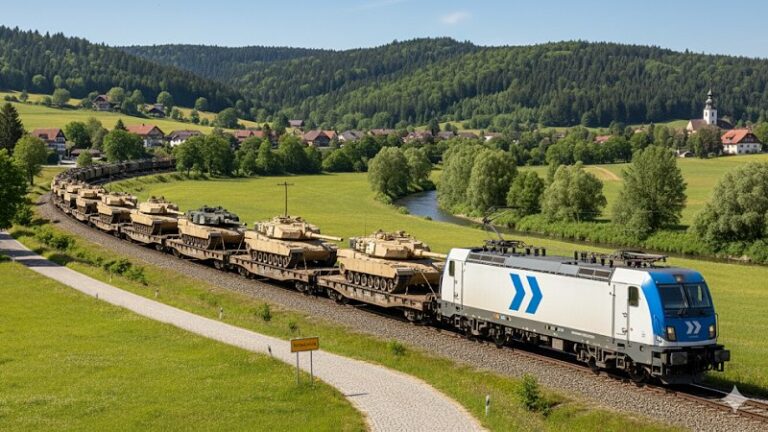
The European intermodal rail freight association UIRR has issued a paper on the state of the current railway network in light of emerging military needs, concluding that making Europe faster and more resilient in moving equipment and materials can be achieved by leveraging what is already in place. Published to coincide with the joint sessions of the European Parliament’s Transport and Security and Defence Committees, the position paper sets out a pragmatic view of military mobility, claiming that today’s combined road–rail transport system already offers concrete operational capacities that could be rapidly and efficiently deployed in support of defence.
The figures cited are significant: the intermodal network links around one thousand terminals and operates some 500 intermodal train departures every day, a structure that, according to UIRR, already guarantees widespread and continuous connectivity across the continent. Added to this is a fleet of wagons specifically designed for intermodal transport — flat and pocket wagons — which can also move wheeled vehicles and, with suitable adjustments, a wide range of military equipment. The issue, therefore, is not improvisation but rather recognising and protecting an existing capability, introducing rules and funding to allow dual use without undermining commercial efficiency.
From an operational standpoint, UIRR highlights how intermodal terminals already meet safety standards suitable for handling dangerous goods and how sector operators are accustomed to arranging dedicated trains on cross-border routes with short lead times. This conviction underpins the association’s call for targeted measures: incorporating transhipment equipment at terminals into the definition of dual-use infrastructure to make them eligible for funding, prioritising the expansion of terminals under the Ten-T regulation, and designating intermodal transport operators as critical entities under the resilience directive. UIRR argues that addressing these three areas would transform the intermodal network into the backbone of European mobility, capable of serving both civil and national or collective defence needs.
However, shifting from commercial capacity to an asset genuinely available for defence raises concrete issues only partly addressed in the paper. For instance, there is no public, detailed mapping of the terminals to be designated as priorities along strategic corridors, without which it is difficult to assess local impacts and anticipate the resources required for infrastructure upgrades. Moreover, giving precedence to military movements at nodes heavily used for commercial traffic raises the question of contractual obligations and compensation: operators forced to give up a slot or traffic window for national security reasons need clear rules and appropriate indemnity mechanisms.
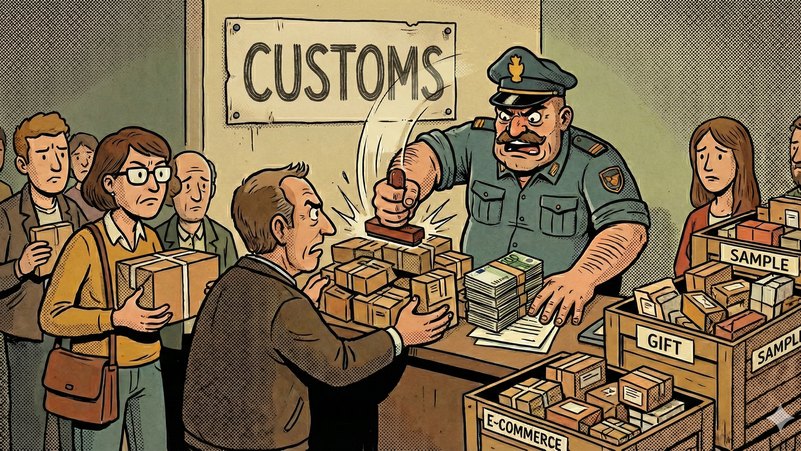
Another sensitive issue is security and liability. Recognising intermodal operators as critical entities brings obligations for physical and cyber protection, requiring additional investment and organisation. UIRR stresses the need for financial and regulatory support to avoid placing an excessive burden on companies. Finally, while the idea of “short notice” deployment of military trains may be credible in theory, it presupposes the removal of practical barriers such as cross-border customs procedures, special permits and, where necessary, technical interoperability between wagons and infrastructure. The paper points in these directions but stops short of offering a detailed operational roadmap.
The UIRR proposal comes at a time when the European Union is debating instruments to speed up military mobility and harmonise procedures among Member States. The Commission has announced a specific package and Parliament has put the subject at the centre of its summer political agenda. In this context, the intermodal sector’s decision to present a fact-based, implementation-oriented position has all the elements to feed into the forthcoming legislative and financial debate. For countries such as Italy, with seaports and intermodal terminals spread from north to south, UIRR’s approach means embarking immediately on a dual track: mapping strategic infrastructure and submitting it for Ten-T upgrade projects, while at the same time defining agreements between ministries and operators to regulate availability in extraordinary scenarios without undermining everyday commercial activity.