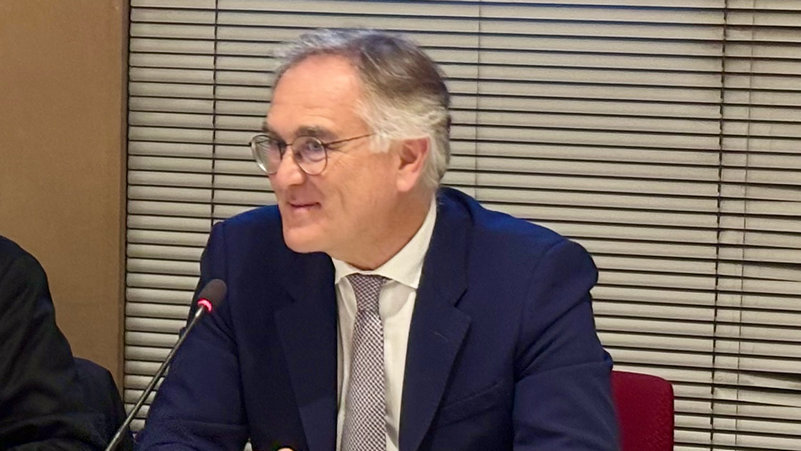





The clouds obstructing the light at the end of the tunnel, quite literally in this case, show no signs of clearing. The reference is to the Italian Terzo Valico Rail Pass. After a series of setbacks that brought tunnelling operations to a halt, construction has resumed, albeit slowly, and the prospect of completion is steadily slipping further into the future. From Cociv, the general contractor in charge of building the new line, no updates have emerged, but a clear admission that things are not proceeding according to the revised timeline came from deputy minister Edoardo Rixi in a video interview for the podcast “L’alfabeto del futuro”, published on the website of daily newspaper La Stampa.
His remarks leave little room for ambiguity. Rixi stated that the target—still not guaranteed—is to complete the civil works of the Terzo Valico before the end of the current parliamentary term. This pushes the calendar to 2027, but that does not signal the line's opening. The deputy minister himself clarified that additional time will be needed, as once construction is finished, at least a year must be allocated for technical inspections and structural testing. That brings the forecast to 2028 at the earliest, possibly beyond.
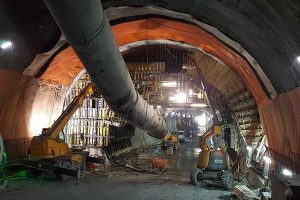
Rixi also provided an update on the major technological challenge faced by the general contractor, such as in the Vallemme-Radimero section, where in March 2024 heavily methane-saturated rock was encountered. To carry out the excavation safely, innovative and ingenious engineering solutions have been required, involving not only venting the gas through pipelines but also deploying small explosive charges after sealing off specific work zones.
Two particular segments have long been known to be problematic: the stretch between the Cravasco and Castagnola access shafts, each with twin tunnels approximately 1,400 metres long, and the Vallemme shaft. In the area between the Cravasco and Radimero worksites, miners encountered swelling rock that deformed and fractured the steel ribs supporting the tunnel roof. Also at the Cravasco site, the unexpectedly high presence of asbestos-bearing rock forced the adoption of stringent safety measures including controlled excavation, dust suppression systems and enhanced ventilation.
At Radimero, it was the two tunnel boring machines used in both tubes that bore the brunt of the adverse conditions, becoming stuck and bringing progress to a standstill. This not only halted excavation but required both TBMs to be dismantled piece by piece, with damaged concrete segments broken up and removed. The result of all these complications is the inevitable delay in project completion. Excavation in the section where the TBMs were immobilised is now continuing using traditional digging methods. A similar fate has befallen other sections affected by methane seepage, where work only resumed gradually during 2025.
Piermario Curti Sacchi