





Array ( [0] => 8 [1] => 10155 )

Podcast K44

Cronaca

  • 17 camionisti arrestati a Savona per furto di gasolio

    17 camionisti arrestati a Savona per furto di gasolio

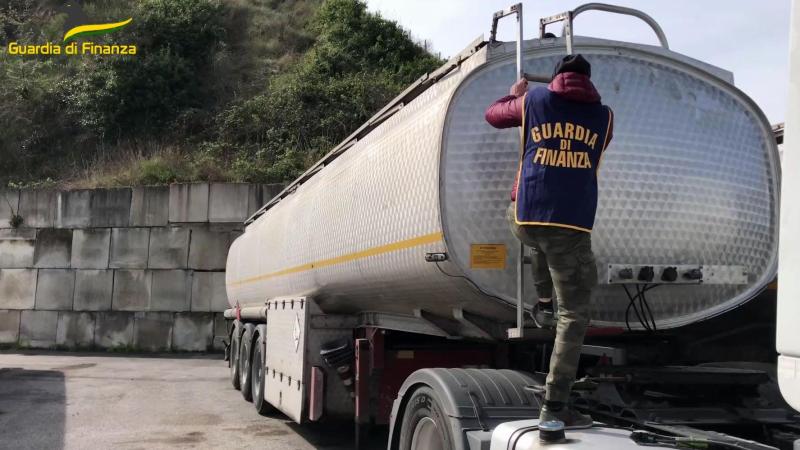
    Un’indagine della Guardia di Finanza nel deposito fiscale carburanti di Vado Ligure ha coinvolto diciassette autotrasportatori, col sequestro di oltre 3.700 litri di gasolio. Il prodotto veniva sottratto durante il carico e rivenduto fuori circuito a prezzi inferiori.

Normativa

Mare

  • A Hormuz navigazione limitata a 15 navi e a pagamento

    A Hormuz navigazione limitata a 15 navi e a pagamento

    Durante la fragile tregua con gli Stati Uniti, l’Iran ha annunciato il 10 aprile 2026 che permetterà il transito nello Stretto di Hormuz solo a quindici navi al giorno su rotta fissa e ribadisce la volontà d'instaurare il pagamento.

Autotrasporto

  • Betz International chiede la procedura d’insolvenza

    Betz International chiede la procedura d’insolvenza

    Betz International, ramo dell’autotrasporto internazionale gruppo tedesco Willi Betz, ha chiesto la procedura d’insolvenza. Una vicenda che s’inserisce in un'ondata di fallimenti che nel 2025 ha portato in Germania a un record storico di fallimenti nelle grandi imprese tedesche.

    Germany should copy Italy to control truck drivers

    German public television channel Ard aired an investigation on its PlusMinus programme comparing controls on heavy goods vehicles in Italy and Germany, concluding that the Italian system is more effective. The report starts from a well-known fact: hundreds of trucks travel on German motorways driven by operators who do not meet legal requirements, hired through intermediary agencies operating in a grey area between social dumping and criminal activity. The key finding is the identification of Italy as a country that has developed an effective response to the problem.

    The mechanism described by the German journalists shows that in Germany the shortage of drivers has created space for a network of agencies, mainly based in Lithuania, recruiting drivers from Central Asia and Africa. Job offers circulate in Cyrillic script on classified portals targeting citizens of former Soviet republics. The cost of a driver hired through such intermediaries can fall to around €145 per day, including charges, compared with a minimum of more than €400 per day for a driver regularly employed in Germany with full insurance and social security coverage. This gap fuels unlawful competition that penalises both exploited workers and compliant hauliers.

    From a regulatory perspective, EU rules require every driver working in another Member State to hold an A1 certificate, issued by the competent insurance body, confirming the applicable social security regime and identifying the employer. In Germany, however, there is no obligation to carry the document on board or present it during roadside checks, unlike in Belgium or Austria. Access to the European A1 certificate database is restricted to Zoll (Customs), which carries out roadside checks only sporadically and mainly for anti-drug or anti-smuggling purposes. The traffic police and the Bundesamt für Logistik und Mobilität (Balm), the federal authority responsible for inspections of commercial vehicles, do not have operational access to these data during routine checks.

    One emblematic case cited in the Ard investigation is the special traffic police unit in Nuremberg-Feucht, which operates mainly at night with a maximum of three vehicles dedicated to trucks. Officers in that unit report a steady increase in drivers from Kazakhstan, Kyrgyzstan, Nepal and Africa holding documents that would not allow them to drive in Europe. Over the years, they have seized hundreds of false passports, driving licences and work permits. However, penalties remain relatively limited and are not sufficient to deter companies from repeating the scheme.

    It is in this context that the PlusMinus report introduces a comparison with the Italian system, presenting it as concrete proof of what can be achieved with regulatory tools already available at European level. In Italy, in addition to the obligation for drivers to carry the A1 certificate in the cab, legislation requires hauliers to submit the certification digitally in advance for every foreign driver entering the country. This mechanism creates a database that can be consulted in real time: any police officer or inspection official can check via mobile phone or tablet whether a valid A1 exists for a specific driver, and identify the employer and the insurance body. Italian Authorities told German journalists that the system’s effectiveness lies in its ability to systematically cross-check employment data with tax and social security obligations.

    The most significant result concerns penalties. According to Ard journalists, the unlawful supply of labour or the use of drivers without adequate coverage is automatically linked to potential tax and social security evasion, paving the way for substantial fines against contracting logistics companies. In this regard, the report refers to investigations carried out in Italy, particularly by the Procura di Milano (Milan Public Prosecutor’s Office), involving major logistics multinationals and their clients, now well known to the Italian public.

    The comparison between the two systems highlights structural differences that go beyond individual rules. In Italy, the A1 certificate acts as the digital backbone of the entire control framework: advance data submission, widespread access to information for all enforcement bodies, and automatic links to tax and social security regulations create a chain of responsibility extending to large transport and e-commerce multinationals. In Germany, by contrast, registers are fragmented at Land level, there is no unified national reporting system, and traffic police operate largely in isolation from social security institutions. As a result, evidence gathered during roadside checks rarely leads to structured enforcement action.

    The Ard investigation concludes with an observation that reads as a call to action for German lawmakers: unless the regulatory framework changes, low-cost driver offers will continue to thrive, and German motorways will remain exposed to risks linked to poorly trained, exhausted or improperly documented drivers. The weakness of the system harms not only exploited workers but also compresses the margins of compliant hauliers through unlawful competition, while shifting onto road infrastructure the costs of safety that is not ensured upstream.

    M.L.

    © TrasportoEuropa - Riproduzione riservata - Foto di repertorio
    Segnalazioni, informazioni, comunicati, nonché rettifiche o precisazioni sugli articoli pubblicati vanno inviate a: redazione@trasportoeuropa.it


      Puoi commentare questo articolo nella pagina Facebook di TrasportoEuropa

      bottone newsletter piccolo Vuoi rimanere aggiornato sulle ultime novità sul trasporto e la logistica e non perderti neanche una notizia di TrasportoEuropa? Iscriviti alla nostra Newsletter con l'elenco ed i link di tutti gli articoli pubblicati nei giorni precedenti l'invio. Gratuita e NO SPAM!


    CONTENUTI SPONSORIZZATI


Videocast K44

Aereo

  • Il cargo aereo scommette sulla tregua del Golfo

    Il cargo aereo scommette sulla tregua del Golfo

    La tregua tra Stati Uniti e Iran può ridurre la pressione sui noli del trasporto aereo delle merci, ma il ritorno alla normalità richiederà fino a due mesi. Intanto le rilevazioni di Xeneta mostrano aumenti fino al 105% sulle principali rotte tra Asia, Medio Oriente ed Europa.

Ferrovia

Persone

  • Di Leverano segretario generale dell’Asp Adriatico Meridionale

    Di Leverano segretario generale dell’Asp Adriatico Meridionale

    Il Comitato di gestione dell’Autorità di Sistema Portuale del Mare Adriatico Meridionale ha approvato all’unanimità la proposta del presidente Francesco Mastro di nominare segretario generale Francesco Di Leverano, che entrerà in carica l’11 maggio con un mandato quadriennale.
Yale aumenta la sicurezza dei pedoni nella logistica

TECNICA

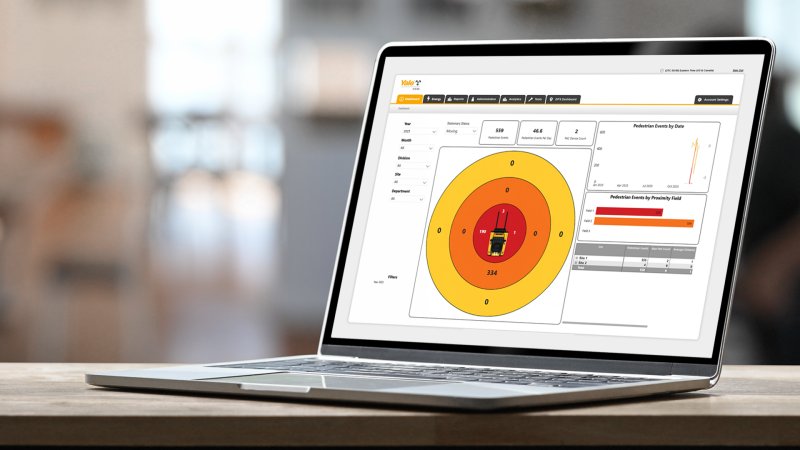
Yale aumenta la sicurezza dei pedoni nella logistica
Still automatizza carico e scarico dei camion

TECNICA

Still automatizza carico e scarico dei camion
Amazon vuole portare i robot dal magazzino alla porta di casa

TECNICA

Amazon vuole portare i robot dal magazzino alla porta di casa
Linde MH presenta i carrelli retrattili Ri al LogiMat

TECNICA

Linde MH presenta i carrelli retrattili Ri al LogiMat
Schmitz rinnova la vasca leggera

TECNICA

Schmitz rinnova la vasca leggera
previous arrow
next arrow
Joint-venture da un miliardo nell’immobiliare logistica europea

LOGISTICA

Joint-venture da un miliardo nell’immobiliare logistica europea
A Fiumicino 600 lavoratori irregolari nella logistica

LOGISTICA

A Fiumicino 600 lavoratori irregolari nella logistica
Il tribunale liquida filiale francese di Ziegler

LOGISTICA

Il tribunale liquida filiale francese di Ziegler
La Cina avvia produzione industriale di robot umanoidi

LOGISTICA

La Cina avvia produzione industriale di robot umanoidi
Come funziona la nuova consegna ultrarapida di Amazon

LOGISTICA

Come funziona la nuova consegna ultrarapida di Amazon
previous arrow
next arrow
Quattro indagati per uso stradale di gasolio agricolo nel Salento

ENERGIE

Quattro indagati per uso stradale di gasolio agricolo nel Salento
Il taglio delle accise è prorogato fino al primo maggio

ENERGIE

Il taglio delle accise è prorogato fino al primo maggio
Petrolio sopra 110 dollari al barile dopo dichiarazioni di Trump

ENERGIE

Petrolio sopra 110 dollari al barile dopo dichiarazioni di Trump
Scoperti a Fiumicino i vampiri del carburante per aerei

ENERGIE

Scoperti a Fiumicino i vampiri del carburante per aerei
Le condizioni dell’Iran per il transito delle navi a Hormuz

ENERGIE

Le condizioni dell’Iran per il transito delle navi a Hormuz
previous arrow
next arrow
Sogedim potenzia le spedizioni per America Latina con Eagle Service

SERVIZI

Sogedim potenzia le spedizioni per America Latina con Eagle Service
Leviahub cresce in Spagna con due acquisizioni

SERVIZI

Leviahub cresce in Spagna con due acquisizioni
Trans.eu cresce in Italia con la borsa carichi relazionale

SERVIZI

Trans.eu cresce in Italia con la borsa carichi relazionale
L’evoluzione della borsa carichi autotrasporto è relazionale

SERVIZI

L’evoluzione della borsa carichi autotrasporto è relazionale
Padrosa realizzerà un parcheggio per camion ad Alessandria

SERVIZI

Padrosa realizzerà un parcheggio per camion ad Alessandria
Leviahub e Pionira accelerano sull’adozione dell’eCmr

SERVIZI

Leviahub e Pionira accelerano sull’adozione dell’eCmr
Trans.eu avvia il pagamento sicuro per l’autotrasporto europeo

SERVIZI

Trans.eu avvia il pagamento sicuro per l’autotrasporto europeo
Sanilog rinnova nel 2026 il piano sanitario per lavoratori della logistica

SERVIZI

Sanilog rinnova nel 2026 il piano sanitario per lavoratori della logistica
L’IA si sta sempre più integrando nel trasporto

SERVIZI

L’IA si sta sempre più integrando nel trasporto
Scania amplia la rete di assistenza nel Lazio

SERVIZI

Scania amplia la rete di assistenza nel Lazio
Nuovi contributi per cibersicurezza alle Pmi e autonomi

SERVIZI

Nuovi contributi per cibersicurezza alle Pmi e autonomi
Dkv Mobility presenta un nuovo software per gestione trasporti

SERVIZI

Dkv Mobility presenta un nuovo software per gestione trasporti
Forto nomina Matteo Caiti Country Manager Italia

SERVIZI

Forto nomina Matteo Caiti Country Manager Italia
Nuove tecnologie Geotab per il trasporto refrigerato

SERVIZI

Nuove tecnologie Geotab per il trasporto refrigerato
Sanzione antitrust di 5 milioni sul noleggio veicoli per Ald

SERVIZI

Sanzione antitrust di 5 milioni sul noleggio veicoli per Ald
previous arrow
next arrow