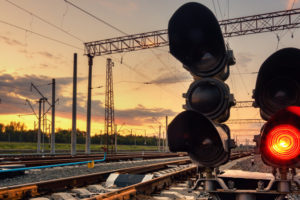






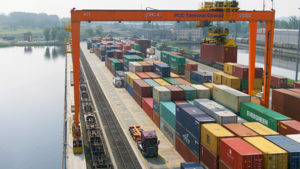
The temporary closure of the Poland-Belarus border, enforced since 12 September 2025, has disrupted the main rail freight route linking China and the European Union. The move, triggered by security concerns during the Zapad-2025 Russian-Belarusian military drills and exacerbated by the incursion of nineteen Russian drones into Polish airspace, has blocked more than 300 freight trains, with significant economic and logistical repercussions.
Polish Interior Minister Marcin Kierwiński had stated that the border would remain shut “until the security of Polish citizens is fully guaranteed”. The measure affected all rail and road crossings, including Kuźnica Białostocka-Grodno, Siemianówka-Svislač and Terespol-Brest. The fallout was immediate. According to New Silk Road Intermodal, over 130 trains were stuck at the Belarusian station of Brest, with hundreds more stranded along the corridor.
The goods affected ranged from electronic and automotive components to solar panels, textiles and even European wine bound for China. Chinese e-commerce platforms such as Temu, Shein and Alibaba, which rely on the speed of rail transport, were particularly hit. Analysts estimated daily losses of €68.5 million, amounting to nearly €900 million over the thirteen days of closure. Transport costs rose by 15% in the short term, with many companies forced to switch to maritime routes, extending delivery times from 15–20 days to 30–45 days.
Diplomatic pressure mounted swiftly. On 15 September, Chinese Foreign Minister Wang Yi met the Polish president and Foreign Minister Radosław Sikorski in Warsaw, calling the China-Europe Railway Express “a flagship project of China-Poland and China-Europe cooperation”. China also offered support for Poland’s G20 bid, but Warsaw reiterated that national security came first. At the same time, logistics operators and European businesses pressed for reopening, warning of escalating losses.
On 23 September, Prime Minister Donald Tusk announced that border crossings would reopen from midnight on 25 September, while stressing that further restrictions could follow if tensions flared again. In the short term, however, the route is expected to remain unstable due to congestion, with potential delays caused by customs clearance, rail slot allocation and prioritisation. Many freight forwarders are urging caution, with companies increasingly exploring alternatives such as the Middle Corridor or maritime transshipments via St Petersburg to mitigate risk.
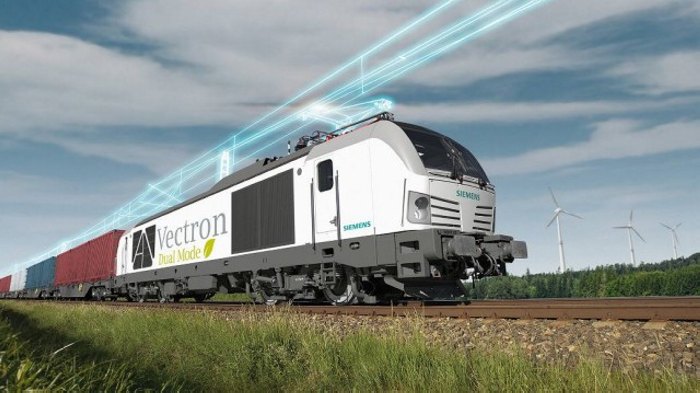
The northern rail corridor running through Russia, Belarus and Poland remains the backbone of overland trade between China and Europe. Industry associations estimate that 85–90% of China-Europe Railway Express trains pass through Poland. In 2024, goods worth €25 billion were moved along this route, an 85% increase on the previous year. At the heart of the system is the Małaszewicze terminal, where gauge changes take place and which currently handles 15–20 trains a day, with expansion plans targeting up to 55 pairs daily.
The closure has highlighted the fragility of relying on a single artery. Since the outbreak of the war in Ukraine, attention has turned to the Middle Corridor, which links China to Europe via Kazakhstan, the Caspian Sea, Azerbaijan, Georgia and Turkey. Transit times are 22–25 days and costs around 20% higher, but the World Bank forecasts growth to 11 million tonnes by 2030, compared with today’s 2.3 million. The European Union has already earmarked €10 billion in investment through the Global Gateway Initiative.
Geopolitically, the shutdown has underscored the vulnerability of the Belt and Road Initiative, particularly the Eurasian corridor exposed to regional tensions. For Poland, the decision also carried domestic costs: in 2024, customs duties from Chinese rail traffic generated 740 million zloty (around €173.4 million), revenue lost during the suspension. The European Commission described the measure as “justified on security grounds” in the context of the war in Ukraine.