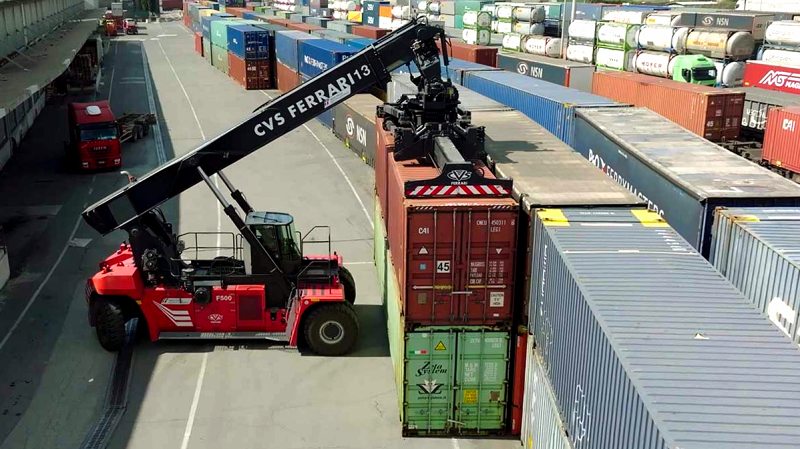








After months of escalating tensions, the United States and China have reached a temporary agreement in Switzerland aimed at easing a trade conflict that threatened the stability of the global economy. The deal, announced on 12 May 2025 after two days of high-level talks in Geneva, includes a sharp reduction in mutual tariffs for a period of 90 days, along with the establishment of a new permanent framework for economic consultation.
On the tariff front, Washington will lower duties on Chinese imports from 145% to 30%, while Beijing will reduce its tariffs on American goods from 125% to 10%. The suspension, which comes into effect on 14 May, will be accompanied by a freeze on further punitive measures already authorised by executive orders. At the same time, China has committed to scrapping a number of non-tariff countermeasures introduced in recent months. The shared objective is to create favourable conditions for broader negotiations that may lead to a lasting settlement of major outstanding issues.
The atmosphere surrounding the agreement has been described by both sides as constructive. US Treasury Secretary Scott Bessent and Trade Representative Jamieson Greer led the American delegation, while the Chinese side was headed by Vice Premier He Lifeng. The discussions, described as “frank and productive”, yielded results that surpassed analysts’ expectations, who had predicted more modest tariff cuts. The market reaction was immediate: stock exchanges in Hong Kong, New York and Europe rallied, while gold and US Treasury bonds declined, reflecting renewed optimism among international investors.
The agreement goes beyond tariffs. One of its most significant features is the creation of a structured commercial dialogue mechanism, comprising working groups coordinated by He Lifeng and scheduled meetings to tackle unresolved matters such as intellectual property, technology, currency manipulation and strategic supply chains. The scope of the agreement was described by World Trade Organization Director-General Ngozi Okonjo-Iweala as “a meaningful step”, expressing hope that the dialogue will continue on a multilateral basis.
Official statements were aimed at sending a message of de-escalation. US President Donald Trump referred to a “total reset” in relations with Beijing, while the Chinese Vice Premier highlighted that the two delegations had reached “a number of important consensuses” useful in establishing a new commercial balance. Nevertheless, remarks from the Chinese Ministry of Commerce and state media suggested a still-resolute stance, with Beijing expecting Washington to abandon “unilateral practices”, subtly warning that China’s patience has its limits.
On the geopolitical front, the agreement takes on broader significance. Amid rising technological competition and tensions over Taiwan and the South China Sea, this signal of rapprochement seeks to avoid an irreversible rift between the world’s two largest economies. The talks have also been interpreted as an attempt to reduce global systemic risk, particularly at a time when international supply chains are seeking greater stability and predictability.
The agreement’s limited duration and the inclusion of a 90-day review clause, however, leave the outlook uncertain. President Trump made it clear that tariffs could return to previous levels if a structural deal is not reached. A new round of high-level meetings is expected, alternating between the United States and China, with a direct meeting between Presidents Trump and Xi Jinping already being considered for later in the week. According to Bessent, the suspension of tariffs could be extended if negotiations continue in good faith.
Numerous and complex issues remain on the agenda. Alongside persistent trade imbalances, discussions will cover China’s industrial policies, semiconductor competition, steel dumping, supply chain security and, unexpectedly, fentanyl trafficking. The latter was addressed by a Chinese vice minister during the Geneva talks, a gesture that American observers have described as a “positive” signal.