
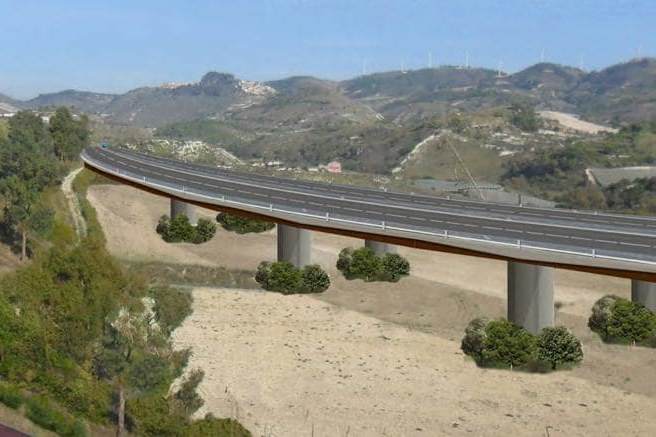






No CEF funds will be available for the construction of the Strait Bridge, at least for the next ten years. The European Commission has in fact excluded the project from the Connecting Europe Facility as part of the Multiannual Financial Framework 2028–2034, unveiled on 16 July 2025. The reason is straightforward: CEF will only finance infrastructure that connects two countries. The new CEF budget amounts to 45.8 billion euros, with thirty per cent earmarked for military mobility. This latter allocation has been criticised by Confindustria.
The decision to include only cross-border projects dashes the Italian government’s hopes of using CEF funds for the Strait Bridge—hopes that had emerged in June 2024, when the EU included the bridge in the Scandinavian–Mediterranean Corridor. On that occasion, the Italian Transport Minister even declared that the bridge was “requested by Europe”. Now it appears that perhaps Europe does want it, but evidently does not intend to pay for it.
So far, the project has received just 25 million euros in non-repayable funding (against an estimated cost of 14.6 billion euros), secured through a grant agreement signed between Società Stretto di Messina and the Climate, Infrastructure and Environment Executive Agency (CINEA). The funding was intended to cover half the costs of the executive design, but only for the railway section of the bridge. This funding, obtained through the 2023 call for proposals under the Connecting Europe Facility for Transport (CEF-T), was positively assessed by the European Commission based on the criteria of “priority and urgency, maturity, quality, impact and catalytic effect”.
Securing the necessary resources therefore remains a pressing issue. In theory, the project could access other European funds, including national allocations established through cooperation plans between Italy and the EU, as well as the European Competitiveness Fund. In both cases, however, the funds would be diverted from other Italian spending priorities. The Italian government has already started using Development and Cohesion Funds (FSC) from Sicily and Calabria, redirecting 1.6 billion euros originally allocated to other priority investments in the two regions. The 2025 Budget Law also provides for an allocation of 6.1 billion euros from European Cohesion Funds under the 2021–2027 programme.
But these national funds will not be sufficient to finance the entire project, covering only about half of the current estimate, not accounting for possible future increases. Opportunities could arise from the European Competitiveness Fund, which has yet to be defined in the new EU budget, and from partnership plans that would require specific bilateral agreements which currently do not exist. Finally, private investors would be expected to contribute, but so far no concrete proposals have been presented.