





A.P. Moller-Maersk ended the second quarter of 2025 with solid operating results, despite navigating an international environment marked by sharp geopolitical and commercial volatility. The Danish group, a global leader in container transport, benefited from higher carried volumes and revenue growth across several segments, but had to contend with a significant fall in freight rates and rising costs in certain areas.
In its core business, the Ocean segment, loaded volumes grew by 4.2 per cent compared with the same period in 2024, reaching 3.23 million FFE, fuelled mainly by Asian exports and robust performance on Intra-Asia, Africa, Asia-Europe, Middle East-Europe and Latin America routes. Compared with the first quarter of the year, the increase was even more pronounced, at 10 per cent across all trade lanes. Alongside this expansion, the average rate per FFE fell to 2,259 dollars, down 9.6 per cent year on year and 6.9 per cent compared with the previous quarter. The decline was particularly marked on East-West routes, while intra-regional traffic recorded an increase.
Revenues in the division rose to 8.572 billion dollars, supported more by higher income from demurrage, detention and hub terminal activities than by freight, which remained steady at 7.3 billion. On the cost side, the unit cost at fixed bunker increased by 1.8 per cent year on year but improved by 5.1 per cent from the previous quarter thanks to economies of scale linked to higher volumes.
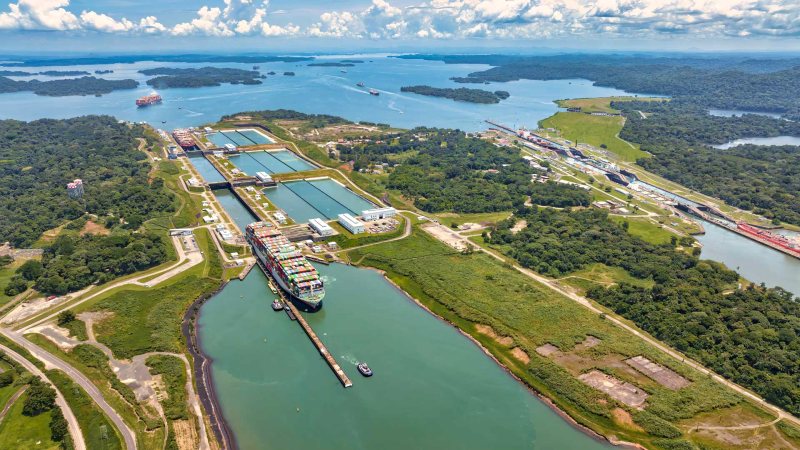
Bunker costs dropped by 16 per cent, driven by an average price of 537 dollars per tonne and a 4.7 per cent reduction in consumption despite greater activity, reflecting a 5.5 per cent improvement in energy efficiency. Operations remain constrained by the continued rerouting via the Cape of Good Hope to avoid the Red Sea, a choice that impacts network costs. Meanwhile, the Gemini cooperation with Hapag-Lloyd, fully operational since June, has already surpassed 90 per cent reliability on the East-West network, laying the foundations for further efficiencies and savings.
EBIT in the segment fell to 229 million dollars from 470 million the previous year, weighed down by the absence of gains from vessel and container sales recorded in 2024 and by higher depreciation linked to new capacity investments. EBITDA remained broadly stable at 1.443 billion, with a margin of 16.8 per cent. Looking at the first half of 2025, Ocean volumes rose by 2.2 per cent, average rates declined by 3.9 per cent and EBIT reached 972 million dollars, a sharp increase compared with 309 million in 2024, while EBITDA stood at 3.346 billion.
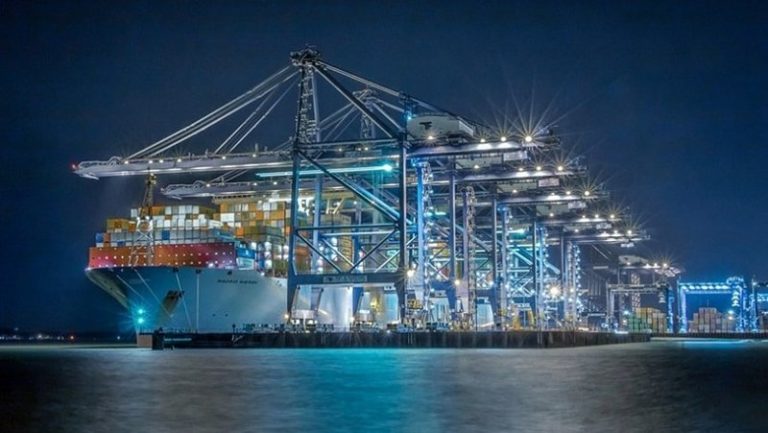
The Terminals segment experienced its best quarter ever, with volumes up 9.9 per cent to 3.584 million moves and utilisation rising to 86 per cent from 76 per cent a year earlier. Growth was driven mainly by internal traffic generated by the Ocean segment, which rose 29 per cent, and to a lesser extent by business from external customers. Revenue per move increased by 8.9 per cent to 360 dollars, supported by higher tariffs, greater storage income and a better terminal mix. EBIT rose to 461 million dollars, with a margin of 35.3 per cent.
In Logistics & Services, revenues grew by 1 per cent to 3.668 billion dollars, with strong performances from Managed by Maersk and Transported by Maersk, while Fulfilled by Maersk posted a slight decline. Profitability benefited from higher productivity and strict cost control, with EBITDA rising 20 per cent to 419 million dollars and EBIT up 39 per cent to 175 million, lifting the margin from 3.5 to 4.8 per cent.
At the macroeconomic level, the global container market recorded estimated growth of between 3 and 5 per cent year on year in the quarter, despite uncertainties linked to higher US tariffs. Weaker North American imports were offset by strong demand in Europe, Latin America, Central and Western Asia and Africa. On the supply side, the nominal capacity of the world fleet rose by 8.2 per cent compared with the previous year, with virtually no scrapping and low levels of idling.
For the whole of 2025, Maersk now expects global volume growth of between 2 and 4 per cent, up from previous forecasts, while acknowledging that pressure on freight rates will remain a critical factor and that tensions in the Red Sea will continue to affect routes throughout the year. The company estimates that a 100 dollar variation per FFE in rates could impact annual EBIT by around 700 million dollars.
Maersk confirms its ability to adapt to market conditions by focusing on volume growth, operational efficiency and investments in alternative-fuel vessels. The challenge in the coming months will be to maintain profitability in a weak rate environment and against a backdrop of geopolitical instability, capitalising on operational synergies such as the Gemini cooperation and on the strengthening of port terminals.