






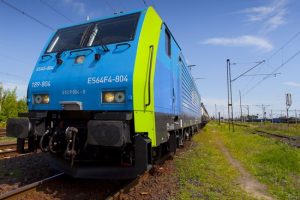
The crisis engulfing PKP Cargo, Poland’s largest rail freight operator, has culminated in a collective redundancy scheme approved by the company’s management and supervisory boards on 18 September 2025. The headcount reduction could affect up to five hundred employees by the end of September, a figure well below the 1,041 initially envisaged. The smaller cut follows negotiations with trade unions and voluntary resignations. Employee notifications are to be completed by the end of September, with departures taking effect from 31 October.
The company will cover part of the redundancy costs through the sale of retired wagons, highlighting its strained financial position. In 2024, PKP Cargo posted a net loss of 2.41 billion zloty (almost €566.5 million). Its total debt reached 5.8 billion zloty (€1.363 billion) after the first three quarters of 2024, up by about 680 million year-on-year. The company is facing a structural crisis, driven in part by a collapse in volumes: between 2013 and 2024, its market share in Polish rail freight plunged from 60% to around 30%.
To save the company, PKP Cargo’s management submitted a restructuring plan to the court on 30 June 2025, covering the period up to 2031. The plan aims to stabilise cash flow and renegotiate debt, while gradually reducing coal transport from the current 45% of revenue to 13% by 2031 and expanding intermodal to 19% of revenue. The target is to achieve positive EBITDA of 1.296 billion zloty (around €304.6 million) by 2031.
This is not the company’s first or largest staff reduction. In 2024, 2,515 employees received redundancy notices, while a further 1,150 left for reasons unrelated to restructuring. In addition, from 1 August 2025, PKP Cargo consolidated its organisational structure, merging its headquarters and seven regional plants into a single unit.
The September 2025 redundancies affect mainly operational staff, including drivers, shunters, rolling stock inspectors and train preparation personnel. For drivers, the company justified layoffs by pointing to low productivity: according to the Ministry of Infrastructure, a PKP Cargo driver covers only 9,500 km per year on average, far below the national average of 20,000 km and the 50,000 km logged by top private operators. The redundancies triggered a series of road blockades in July 2025, organised by the Związek Zawodowy Maszynistów Kolejowych union. Solidarność also intervened, filing a formal petition demanding immediate payment of arrears and severance owed to dismissed staff. The future remains uncertain, as PKP Cargo has not clarified whether more job cuts will follow in 2026, a decision that will depend on this year’s financial results and freight volumes.
The restructuring plan also foresees a major downsizing of PKP Cargotabor, the subsidiary responsible for wagon maintenance and repair. In September 2024, management announced the closure of five of its fifteen facilities. This could have operational repercussions, particularly on flows to Poland’s ports. The loss of rapid repair capacity for rolling stock serving Szczecin-Świnoujście and Gdańsk-Gdynia could undermine the country’s logistics efficiency.