




For the fourth time, the European Commission has challenged Italy over the renewal procedure of the A22 Brenner motorway concession. On 8 October 2025, Brussels issued a 19-page letter of formal notice, reopening with harsher tones the infringement procedure INFR(2018)2273. The Commission once again questions the compatibility of Italy’s motorway concession renewal system with Directive 2014/23/EU and with the principles of free competition enshrined in the Treaty on the Functioning of the European Union.
According to the Commission, the current national rules allow Italy to bypass open competition among economic operators, breaching the principles of transparency and equal treatment required under EU law. Italy has been given two months to submit its observations and attempt to prove the compliance of its Public Contracts Code.
The issue dates back to 2018, when Brussels launched infringement proceedings against Italy, sending three formal notices between 2019 and 2022. The main criticism concerns the use of project financing and the right of pre-emption—mechanisms which, in the case of the A22 concession, would allow the promoter, Autostrada del Brennero, to secure the award even without submitting the most competitive bid.
According to the Commission’s Directorate-General for the Internal Market, Industry, Entrepreneurship and SMEs (DG Grow), the Italian model of project financing leaves excessive room for administrative discretion and fails to guarantee genuine market openness. The possibility for the promoter to match the winning bid—meaning that Autostrada del Brennero has the right to equal the offer made by a competing bidder—is deemed incompatible with Articles 49 and 56 of the TFEU, which safeguard freedom of establishment and freedom to provide services, and with Directive 2014/23/EU governing public concessions.
The right of pre-emption has become the crux of the legal dispute. In November 2024, the Italian Council of State referred the matter to the Court of Justice of the European Union (Case C-810/24), asking whether the Italian provision contained in Article 183, paragraph 15 of Legislative Decree 50/2016 complies with the European principles of proportionality, competition and sound administration. Pending a ruling, not expected before the end of 2025, the Ministry of Transport has suspended the tender for the A22 award until 30 November 2025.
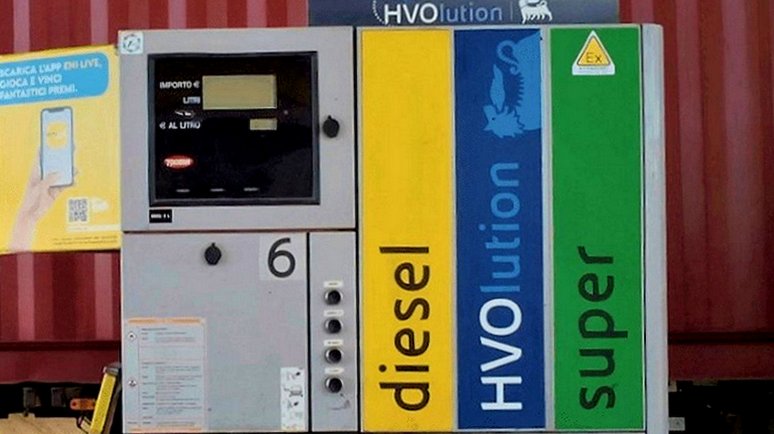
The suspension aims to avoid an award that could later be annulled at EU level, but it has deepened uncertainty over an infrastructure that has been operating under a provisional regime for more than ten years since the previous concession expired. Meanwhile, the renewal project proposed by Autostrada del Brennero remains at the centre of debate. The company—84.75% publicly owned, with the Trentino-Alto Adige Region as the main shareholder (32.29%)—submitted in 2022 a €9.2 billion project financing proposal to transform the Modena–Brenner route into Europe’s first “Green Corridor”. The plan includes upgrading works, three lanes between Verona and Modena, connected driving systems, eight hydrogen refuelling stations and integration with the future Brenner Base Tunnel railway link.
The goal is to cut the environmental impact of an artery handling more than 60 million tonnes of freight per year, promoting modal shift to rail and the use of zero-emission vehicles. However, the project’s financial and institutional sustainability depends on the legal certainty of the concession model.
The right of pre-emption is staunchly defended by the presidents of the Autonomous Provinces of Trento and Bolzano, Maurizio Fugatti and Arno Kompatscher, who argue that Italian law complies with EU rules and safeguards the public nature of the infrastructure. The Transport Minister has repeatedly backed the local authorities’ position, while accepting the suspension as a precaution. Regional opposition groups and some parliamentary forces, however, are calling for the tender to be scrapped and for the creation of a fully public in-house company, a solution they see as more consistent with EU case law on local public services.
If Italy fails to comply with the Commission’s demands, it risks substantial financial penalties. Sanctions for prolonged infringements include a lump-sum payment and a daily fine, starting from €8,505 per day for Italy, which can increase depending on the seriousness of the breach. Between 2012 and 2021, Italy paid more than €800 million for infringement procedures, and a new dispute over the concession system would further worsen the picture.
The forthcoming ruling of the Court of Justice will set an important precedent for the entire Italian motorway concession sector, where several contracts—such as the A4 Brescia–Padua—are nearing expiry and could face similar consequences. A ruling against the right of pre-emption would require a major overhaul of the project financing framework and the general opening of tenders at European level. Conversely, confirmation of its compatibility would allow the current legal structure to continue, though leaving the Commission’s concerns about transparency unresolved.