





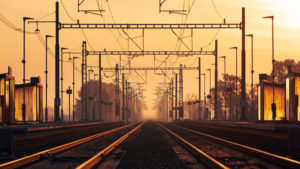
Within a few years, the railways of the Istrian peninsula—part of Croatian territory—are set to be transformed and integrated into the continent’s freight corridors. It marks a significant leap forward: from modest local lines that have seen little change since their origins, the goal now is to bring the region’s infrastructure up to full European standards. While the network managed by HŽ Infrastruktura has already been modernised in northeastern Croatia, starting from Zagreb, Istria has been left largely behind. That imbalance is now being addressed.
The first investment by Croatian Railways, soon to enter the construction phase, focuses on the complete upgrade of the central route stretching from Buzet (Pinguente), near the Slovenian border, to Sveti Petar u Šumi (San Pietro in Selve), some fifty kilometres to the south. This section is part of a broader corridor linking Divača (Divaccia) in Slovenia to the southern tip of Istria and the port of Pula (Pola).
The works include a full overhaul of the railway bed, with complete replacement of the track structure - ballast, sleepers and rails - as well as the reinforcement and reconstruction of bridges and culverts, and the installation of a modern signalling and safety system. The Croatian network operator estimates three years of work on what is just the first segment in a comprehensive plan to rehabilitate Istrian railways and restore freight services, which have so far played a marginal role. The entire corridor from the Slovenian border to Pula will be electrified.
Following the modernisation of the Buzet–Sveti Petar u Šumi line, further interventions are planned, particularly the construction of a new direct connection - currently non-existent - linking Lupoglav (Lupogliano) with Rijeka (Fiume). This would require the construction of a long tunnel beneath the Učka mountain range (Monte Maggiore). A glance at a map reveals the strategic value of this future route, which would connect and integrate central and southern Istria with Croatia’s core network, giving the entire region a decisive boost and embedding it in the broader system of connections between ports and European corridors heading north.
If the project reaches completion—as now seems likely—it could also revive interest in reopening a currently suspended railway line closed due to a landslide, with Lupoglav as its central point. Reinstating this route would allow trains to reach Raša (Arsia), further enhancing Istria’s potential as a logistics hub.
The modernisation of Croatia’s railway network is being driven by a national investment plan that has focused on key routes such as the line from Zagreb to Vinkovci, where maximum speeds have been increased to 160 km/h, compared to earlier limits as low as 80 km/h in some sections. For new electrifications, the system adopted is 25 kV alternating current, in line with the best European standards, and some previously electrified lines using different systems have been converted—an almost unique case in Europe.
Piermario Curti Sacchi