



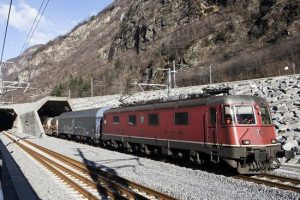
It all began with the serious accident in August 2023 inside the Gotthard base tunnel, when a freight train derailed, causing infrastructure damage estimated at no less than €150 million and forcing the tunnel to remain closed for a long period to allow repairs. In its final report published in June 2025, the Safety Investigation Service (Sisi) identified the breakage of a wheel on one of the wagons involved as the root cause of the accident. The report also highlighted collateral damage linked to the use of LL-type brake blocks (standing for “low-noise, low-friction”).
But the Sisi investigation did not end with a single technical recommendation concerning a specific component of the braking system. The Federal Office of Transport (Uft) extended the inquiry, involving industry representatives, and concluded that the use of composite brake blocks instead of traditional cast iron ones creates a systematic risk of wheel breakage. As a result, in September 2025 a decision was issued containing numerous prescriptions, with immediate effect.
For railway undertakings outside Switzerland, this decision has been something of an earthquake, forcing them in a very short time to deal with measures that heavily impact both service organisation and costs. The Uft’s provisions require minimum wheel diameters, more frequent maintenance and systematic inspections. Wheels must have a minimum diameter of 864 millimetres, compared to the 860 millimetres currently applied at European level.
Maintenance is another key factor: depending on the type of brake block, it must now be carried out systematically after 50,000 or 200,000 kilometres, rather than at the longer intervals currently in place. Additional checks, such as percussion tests, must be performed regularly. In the future, every freight wagon must carry documentation of its most recent technical inspection so that railway undertakings can verify compliance before using it in a train transiting Switzerland. Wheels must also feature a coloured stripe indicating any overheating.
Implementation of these measures is the responsibility of maintenance companies and must be completed by the end of 2025. The only ones to have welcomed the new rules are the Swiss Federal Railways (SBB), already committed to applying all Uft requirements, as they drastically reduce the risk of further accidents. But outside Switzerland concerns are significant.
In Italy, they have been voiced by Fercargo, the association of freight railway undertakings competing with Mercitalia Rail. While safety is regarded as a non-negotiable priority, the association argues that rules must be uniform across Europe to avoid hindering the sector. According to Fercargo, coordination with the European Union Agency for Railways (ERA) is indispensable in order to create a single European railway area, since non-harmonised national rules inevitably create barriers that slow the growth of rail and favour other modes of transport. It also stresses the importance of ensuring that rules and implementation timetables are realistic, taking into account not only safety risks but also economic impacts.
Piermario Curti Sacchi