








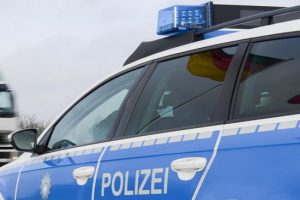
Germany is changing the way its authorities enforce driving bans against drivers with EU or European Economic Area licences who do not have ordinary residence in the country. The change also affects foreign professional drivers engaged in international freight transport: the Fahrverbot, the driving ban imposed in Germany for serious offences, is no longer physically marked on a foreign licence, but recorded in the Fahreignungsregister, a digital register known as Faer. During roadside checks, the police and other competent authorities can therefore immediately verify whether a foreign driver is subject to a driving ban valid in Germany or to a relevant entry in the Faer. However, this is not a European database of offences, nor a system that makes all violations committed by a lorry driver in different EU countries visible.
The distinction is crucial to understanding the measure correctly. The reform strengthens the enforcement of German measures on German territory, but it does not create a single transnational archive. The Faer remains a national register managed by the Kraftfahrt-Bundesamt (Federal Motor Transport Authority), with an administrative and internal control function. German authorities can consult data entered in the national system, particularly Fahrverbote and entries needed to establish whether a driver may drive in Germany. The origin of the change is legal. Germany had to adapt its legislation to a 2021 ruling by the Corte di Giustizia dell’Unione Europea (Court of Justice of the European Union), according to which a member state may not enter annotations or restrictions directly on an EU or European Economic Area licence issued by another member state when the holder does not have ordinary residence in its territory. The previous mechanism, based on physically altering the foreign driving document, was therefore incompatible with the European interpretation.
To overcome this limit, the federal government presented a specific law introducing new rules for enforcing driving bans and licence revocation against holders of EU and European Economic Area licences without ordinary residence in Germany. The measure was submitted to the Bundestag (Federal Parliament) and also passed through the Bundesrat (Federal Council), before continuing through the federal legislative process until approval at the end of 2025. In practical terms, this means that, for a foreign driver, physically replacing the licence card through renewal or a duplicate no longer makes it possible to conceal a German ban, because the information is recorded in the German system. For road haulage companies, this increases the need to check carefully the status of drivers working in Germany, especially when penalty proceedings are pending or measures have already been notified.
However, the change applies only to holders of EU and European Economic Area licences who do not have an "ordentlicher Wohnsitz", meaning ordinary residence, in Germany. It therefore does not apply to all foreign drivers in the absolute sense. For those who reside in Germany or drive with documents issued by the German authorities, the ordinary procedures under national law continue to apply, including the withdrawal and custody of the document. In addition, the German measure does not automatically become a ban valid across the whole European Union: its effect remains linked to driving on German territory.
P.R.