







Northern Europe’s logistics sector remains under strain as the year draws to a close. At the port of Hamburg, terminals are still congested, access is managed by the Hamburg Port Authority, and the transport of empty containers, essential to balancing import flows, is severely restricted. These difficulties, repeatedly flagged by rail operators in recent months, coincide with an intense series of planned closures and diversions across the German network, scheduled to last until spring 2026.
The repercussions are expected to be substantial for cargo flows to and from northern German ports. Rail transits across the country are already irregular, and in the months ahead the impact of these interruptions will extend to connections spanning a wide area from central Europe to the Balkans.
The first critical section is the Berlin–Hamburg line: between August 2025 and April 2026, trains will be rerouted mainly via Hanover or Rostock. This structural diversion will affect all services to and from northern German ports, with knock-on effects for the Czech Republic, Slovakia, Poland, Hungary, Austria and the Balkan region.
From September, daily restrictions will be added along the Elbe Valley, with traffic redirected via Cheb/Schirnding, Horka and partly via Passau. In October, attention will shift to the Bremen–Bremerhaven corridor and to Hamburg’s Finkenwerder Bridge, which governs access to the Eurogate and CT Burchardkai terminals. In these cases, alternatives will be scarce, and on some days non-existent. Disruptions will then continue with the Oderbrücke junction, further closures on the Elbe Valley and additional planned works between November and December, particularly from 1 to 10 December, when the stretch along the Elbe will be completely shut down.
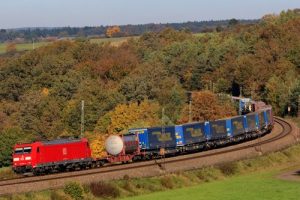
To mitigate the fallout, rail operators are resorting to alternative routes, in some instances using private infrastructure and diesel traction. Yet these measures face technical limitations, forcing shorter train lengths and reducing overall capacity. At the same time, diversions lengthen journeys and make delivery times less predictable, a factor that threatens the competitiveness of entire industrial and commercial supply chains.