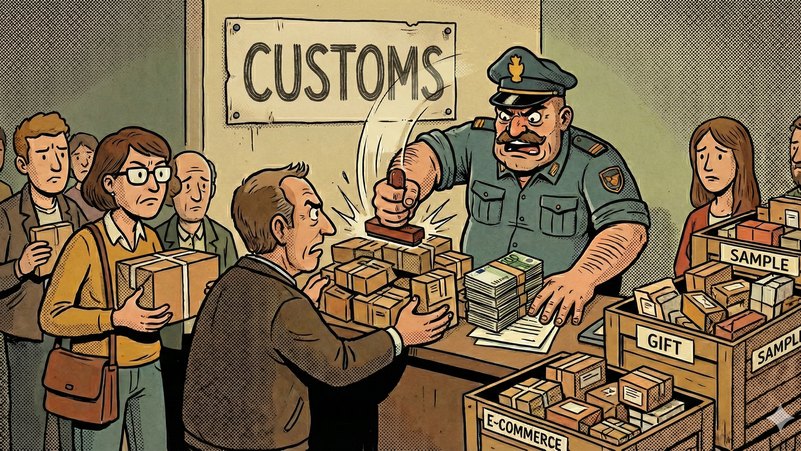











In September 2025, FedEx confirmed that the impact of tariffs imposed by President Donald Trump and the end of the customs exemption for low-value shipments (de minimis) would result in costs of around one billion dollars (930 million euros) in the current financial year. According to chief financial officer John Dietrich, about 300 million dollars of the estimated cost is linked to new customs clearance procedures, while the direct effect on outbound volumes from China amounts to roughly 700 million. The loss of preferential tariff treatment affected the quarter by 150 million, a figure lower than initial expectations. To address this situation, the company reduced air capacity from China to the United States by 25%, but offset the cutback by redeploying cargo aircraft to Asia–Europe routes, where demand remains strong and tariffs are more stable.
Results nevertheless remain positive. In the first quarter of the fiscal year, closed on 31 August, revenues rose 3% to 22.2 billion dollars (20.6 billion euros), with an adjusted operating margin of 1.3 billion (+7%) and earnings per share of 3.83 dollars, above Wall Street forecasts. The Memphis-based group projected revenue growth for the full year of between 4% and 6%, with 2026 earnings per share in the range of 17.20 to 19 dollars, slightly below analysts’ average estimates.
The impact of tariff policy came on top of the expiry, in September 2024, of the air transport contract with the US Postal Service, which had a negative effect of 130 million in the quarter. FedEx nevertheless exceeded market expectations, supported by a strong contribution from the domestic market and its cost-reduction plan. In air transport, the Tricolor strategy enabled flows to be divided across three networks (Purple, Orange and White), increasing load density and lowering unit costs. Thanks to this reconfiguration, revenues from international Priority and Economy Freight shipments rose 14% year-on-year, with a 9% increase in revenue per pound shipped. Healthcare logistics made a significant contribution, accounting for about half of the increase in US export volumes.
The Freight segment recorded a 3% drop in revenues due to weakness in the industrial sector, but the planned spin-off remains scheduled for June 2026. Meanwhile, FedEx repurchased 500 million dollars’ worth of its own shares in the first quarter and expects to continue buybacks during the year. The Network 2.0 programme, which merges the Express and Ground networks, generated 200 million dollars in savings in the quarter and has so far involved 360 stations in the US and Canada. The stated target is two billion dollars in annual savings once the reorganisation is complete. By the end of the month, almost three million parcels a day will be processed through consolidated facilities.
Analysts highlight that risks linked to the new tariff framework remain significant, but clarity over the expected impact, together with structural cost reductions, has improved investor sentiment. According to Barclays’ data, the group’s flight activity fell 20% year-on-year, but network flexibility and route reallocation helped contain the effect on revenues.