





There is a common thread, namely a technical anomaly due to negligence, linking two railway accidents of very different magnitude. The first, the most tragic, was the Livraga disaster of February 2020, when a wrongly installed turnout caused a Frecciarossa 1000 to derail, killing two drivers and injuring several passengers. The second, more recent, was the collision between freight trains in the Milan hub in September 2024. Only favourable circumstances and a fair amount of luck meant that this second accident, which also involved a passenger service, did not have the same tragic outcome as the earlier crash in Lombardy.
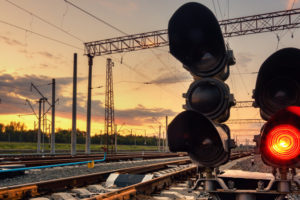
The facts are these. On 13 September 2024, an Evm Rail freight train from Turin Orbassano bound for the border crossing at Villa Opicina was travelling on the odd-numbered track of the belt line at the Seveso junction towards Milan Lambrate when it struck the last wagon of a DB Cargo Italia freight service from Busto Arsizio to Chiasso Smistamento, which was standing on an adjacent track because the protection signal was set to danger.
As a result of the impact, the Evm Rail locomotive derailed and two containers on the last wagon of the DB Cargo train were thrown onto the twin tracks of the adjacent Milan Certosa–Milan Centrale passenger line. Moments later, a regional train from Domodossola bound for Centrale ran into one of the containers, coming to a halt after about a hundred metres. The accident caused severe damage to the infrastructure, valued at over 1.6 million euros, and had a major impact on operations in Lombardy’s main rail hub.
The exact sequence of events has now been reconstructed by the Ministry of Infrastructure and Transport’s Office for Railway and Maritime Investigations (Digifema) in a report dated 13 September 2025. It was neither an act of fate nor misfortune. The main cause of the first collision between the two freight trains, as the report makes clear, “was traced back to the absence, on the section of infrastructure concerned, of the prescribed mechanical devices able to detect the occupation of the track circuit, that is to say, to register the presence of the wheels of the DB Cargo freight train standing on the line near the collision point.” Digifema’s reconstruction adds, without circumlocution: “This absence was in turn traced back to earlier maintenance work that had not been properly completed.”
Without delving too deeply into technicalities, track circuits at points and crossings are designed to detect a train even at critical locations where rails are interrupted or moved to divert the route. To maintain electrical continuity, the various parts of the turnout – switch blades, crossing nose and check rails – are connected by redundant braids, flexible conductors that ensure current flow in the track circuit regardless of the quality of the mechanical contact between rails. In this way, the circuit always remains closed under a train’s wheels, signalling receives correct information, and safety is guaranteed by avoiding false faults or undetected track occupancy.
The RFI investigation, as reported by Digifema, found that “at the moment of the accident, track circuit 352 lacked the required redundant parallel braids” and their absence “led to the failure of the system, which could not detect the occupation of part of the track circuit of the turnout beyond the limiting sleeper.” As a result, the central control systems were effectively deceived and authorised the passage of the Evm Rail service, which then ran straight into the tail of the DB Cargo freight. That was the origin of the collision.
This was therefore a case of human error, but unlike in the relatively distant past, when rail accidents almost invariably occurred because a signal was carelessly ignored, today technology provides a high level of safety. What remains is the uncertainty of proper maintenance, as in the Livraga case where an incorrectly installed turnout circuit had devastating consequences.
Piermario Curti Sacchi