






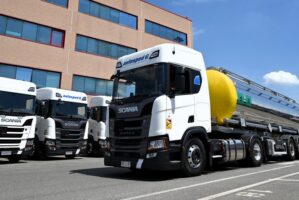

The bankruptcy of Eurosped Belgium, ruled on 10 September 2025 by the Commercial Court of Hasselt, is another episode in the crisis sweeping Belgian road transport. The Sint-Truiden-based company, founded in 2006 and ranked in 2015 as the fastest-growing transport company in the country, had already faced a first insolvency procedure in March 2022, later overturned. This time, with its fleet cut to eight vehicles and 77 employees still on the books, the collapse appears final.
The company’s decline began in 2018 with the death of founder Rik Vanlessen, followed by a steady financial deterioration. In recent years working capital had remained persistently negative, despite positive equity, while rising financial costs eroded margins. The sale of its headquarters and drastic downsizing of the fleet proved insufficient to avoid insolvency.
Eurosped is not an isolated case. In August 2025 the De Wolf Group was declared bankrupt, operating through a holding company and four subsidiaries. Its diversification strategy launched in 2020 failed to offset losses inherited from the acquisition of Transport Bellekens, which had been in the red since 2022. A restructuring plan approved in April 2025 proved inadequate, with around 100 employees caught up in the insolvency procedure.
Another case is Supreme Transport, established in 2018 in Wommelgem, which had invested over €2 million and expanded its fleet to 60 vehicles. After rapid growth, accumulated losses in 2023 led to its bankruptcy in July 2025. Further upstream in the supply chain, the collapse of bus manufacturer Van Hool, declared insolvent in April 2024 with the loss of 2,500 jobs, has worsened the difficulties facing the transport sector.
According to figures published by Statbel, in 2024 the Belgian transport and logistics sector recorded 724 bankruptcies, up 11.7% on 2023 and setting a new record high. Out of a total of 11,067 corporate bankruptcies that year, the sector accounted for 6.5%, despite representing only a smaller share of the national economy. The employment impact has been significant: more than 32,500 jobs lost nationwide in 2024, including 1,198 in transport alone in the first four months of 2025. Flanders was the worst affected region with over 19,000 jobs lost, followed by Wallonia and Brussels.
The causes of the crisis are multiple. The price of diesel rose by 4.9% between the end of 2024 and January 2025, climbing from €1,545 to €1,621 per thousand litres. Since 2025 companies have been obliged to cover 70% of their emissions through carbon allowances under the ETS scheme, with additional costs difficult to pass on to customers. At the same time, road tolls linked to CO2 emissions have increased. Added to this are the structural shortage of drivers, which has pushed wages up by 4.5% annually, and strong international competition, particularly from Eastern European and Ukrainian operators, active in the EU market since 2022.