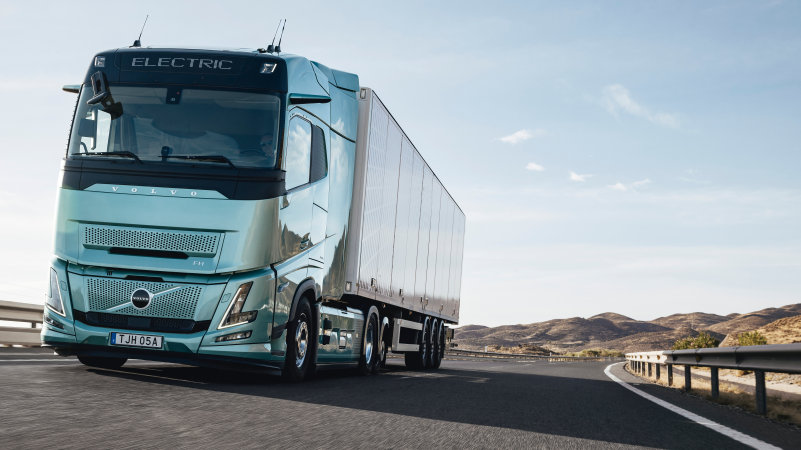







From 6 to 17 October 2025, heavy goods vehicles with a gross weight exceeding 3.5 tonnes will be banned from travelling on the Austrian Brenner motorway axis as part of extraordinary maintenance works on the Luegbrücke bridge. The measure is set out in Regulation No. 110, issued by the Tyrol region on 15 September 2025, which introduces new restrictions for heavy traffic on the Brenner motorway. The ban applies between 21:00 and 05:00, Monday to Thursday nights, on the A12 Inntal and A13 Brenner motorways. The restriction is designed to allow urgent resurfacing work while keeping two lanes open during peak traffic periods. An exemption applies for vehicles heading towards Innsbruck on the A13, where the ban runs from 22:00 to 05:00. No alternative routes are available, and compliance will be enforced by Tyrolean police checks at Pettnau and Kufstein.
This measure is part of a broader regulatory framework. The Federal Law Gazette II No. 409 of 27 December 2024 had already established the general scope of bans linked to the refurbishment of the Luegbrücke, including systematic truck stoppages on Saturdays from 7 June to 27 September 2025 and additional restrictions on peak traffic days. These were followed by Regulation No. 72 of 16 April 2025 and the Fahrkalender 2025, drawn up by Asfinag together with the Tyrol region and the Federal Ministry for Climate, Environment, Energy, Mobility, Innovation and Technology, to provide operators with a comprehensive planning framework.
The backdrop to these measures is the renewal project for the Luegbrücke, a 1.8-kilometre bridge in the Wipptal valley, some 30 kilometres south of the Europabrücke. Built over 55 years ago, the bridge has reached the end of its service life. The replacement and modernisation project, awarded to the Strabag-Porr consortium for a total of €380 million, will be carried out in three main phases and is scheduled for completion by 2030. Since early 2025 traffic has been reduced to one lane in each direction, while for around 180 days a year a temporary two-lane system is activated, with HGVs over 3.5 tonnes directed to the left lane to distribute loads towards the centre of the structure.
Austrian media have closely followed developments. The Tiroler Tageszeitung reported on consultations with Bavaria on possible adjustments to the October restrictions. Press sources also highlight that the measures were prepared in cooperation with the police and include the installation of five new metering traffic lights, limitations on secondary road use and enhancements to local public transport.
For international freight traffic between Italy and Germany, the system of planned bans poses a significant challenge. In 2025, 36 southbound and 21 northbound ban days are scheduled, in addition to time-based and regional restrictions set out in the regulations. At the Kufstein/Kiefersfelden border crossing, the metering system limits flows to 300 trucks per hour on specific dates. To help operators manage this complexity, Asfinag has developed a range of digital tools, including travel time widgets, automatic weight control systems and a truck routing tool, due for release in the second quarter of 2025, integrating traffic data from Bavaria, Switzerland and South Tyrol.