






- Brent crude rose to $85.5 a barrel on 17 July 2026, up 18% in two weeks, following renewed tensions in the Strait of Hormuz and the block on Russian diesel exports. According to the IEA, in 2026 the world will consume 0.9 million barrels per day more than it produces, with the gap being covered by drawing down stocks.
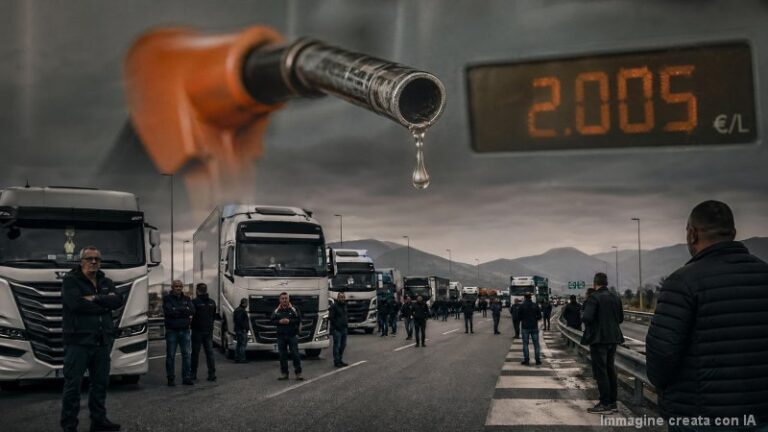
- European refiners are shifting production from kerosene to diesel, whose refining margin has exceeded $70 a barrel, according to Argus. The average diesel price in the European Union reached €1.929 per litre on 16 July, with eight of the 27 countries above €2, compared with just two a fortnight earlier. There is no sign of a trend reversal.
- Several governments are allowing support measures to expire just as prices rise again: the Czech Republic will abolish the cap on margins and the excise duty discount on 19 July, while Italy has already seen diesel rise to €2 after the cut ended on 3 July. Other countries, including Ireland, Spain and Serbia, have instead extended or strengthened their measures.
Oil and diesel price volatility returned in mid-July 2026: Brent moved above $85 a barrel, wiping out in two weeks the decline recorded at the start of July. This is according to the latest fuel price update published by the IRU on 17 July, which added that this is happening just as public support measures introduced by European governments are reaching their expiry date. On 3 July, Brent was trading at $72.5 a barrel, below the pre-war benchmark of late February. Since then, the trajectory has reversed: on 17 July, the European benchmark crude rose to $85.5, an 18% increase in two weeks and 17% above the late-February baseline. West Texas Intermediate (WTI), the main US benchmark, moved in the same direction, reaching $80.1, up 16% over the same period. The gap between the two benchmarks, known as the Brent-WTI spread, widened from €3.0 to €4.7 a barrel: a sign that supply tensions are concentrated in the Atlantic and European area rather than globally, given that the two benchmarks normally compete on the same international market.
The International Energy Agency, IEA, in its monthly report published on 10 July, describes a market that is returning to balance, but warns that the improvement remains fragile and depends on the recovery of tanker traffic through the Strait of Hormuz, which has been called into question by events in mid-July. In June, global demand recovered from May’s low of 97.9 million barrels per day, a level 5.3 million below a year earlier, and for 2026 as a whole the IEA still expects an average of 103.5 million barrels per day, about one million less than in 2025. On the supply side, production rose by 4.1 million barrels per day in June to 98.8 million, with exports from Middle Eastern producers around the Strait of Hormuz recovering to 16.1 million barrels per day, still 8 million below February levels. Taking demand and supply together, the IEA estimates a 2026 imbalance of 0.9 million barrels per day, which can only be covered by drawing down stocks.
Global stocks monitored by the IEA did in fact increase by 21 million barrels in June, the first monthly rise since February. However, the entire increase concerns oil stored on tankers at sea, amounting to 117 million barrels, rather than oil delivered and stored on land: onshore stocks fell by a further 96 million barrels, including 44 million taken from government strategic reserves, bringing public stocks in OECD countries to their lowest level since December 1990. It should be noted that while onshore stocks have already been paid for, stocks at sea may remain exposed to price movements. The IEA also notes that the recovery in refined products such as diesel is proceeding more slowly than that of crude: shipments of refined products out of the Gulf remain at less than half the February pace, compared with almost three quarters for crude, while Russian diesel exports have roughly halved since June. This combination explains why the shortage is hitting diesel harder than oil supply as a whole.
The latest data from the United States confirm the same pattern. With refineries operating at 96.2% of capacity, distillate stocks - the category that includes diesel - rose by 4.6 million barrels in the week to 10 July, extending the June build-up of 6.3 million, although they remain about 11% below the five-year average. Crude stocks, however, fell to 409.7 million barrels, 6% below the average and their lowest level since September 2018: refiners around the world are drawing on their crude reserves to rebuild a still-thin diesel buffer, an equilibrium that could come under pressure again as early as August.
The Organization of the Petroleum Exporting Countries, OPEC, in its monthly report of 13 July, confirms the same direction, albeit with some differences in detail. For the third consecutive month, OPEC revised down its 2026 demand growth forecast, cutting it by 190,000 barrels per day to an overall increase of 780,000 barrels per day, for a total of 105.94 million barrels per day; China, down 110,000, and India, down 60,000, account for most of the revision. Despite the cut, OPEC’s 2026 demand estimate remains about 2.4 million barrels per day higher than the IEA’s. On the supply side, combined OPEC+ output - member countries plus allies such as Russia - stood at 36.28 million barrels per day in June, almost 3 million more than the previous month but still 6.5 million below late-February levels. With supply growth outside OPEC+ stuck at about 640,000 barrels per day, the cartel’s own figures point to a potentially significant deficit for the current year if Gulf production remains constrained at current levels. Whichever demand estimate proves more reliable, the IEA and OPEC describe the same underlying scenario for 2026: the world is consuming more oil than it produces, and the difference is being covered by reducing stocks.
On the refining front, European plants are shifting production from kerosene to diesel. From March to June, refiners had prioritised kerosene, whose margin was higher than that of other fuels; that trend has now reversed, according to price reporting agency Argus. The refining margin on diesel - the difference between the price of crude and the finished product, also known as the "crack spread" - is now approaching $70 a barrel, well above the roughly $60 for kerosene. Diesel has cost more than kerosene for three consecutive weeks, the first time in 2026, and Argus analysts expect this advantage to continue in the coming months. Two factors could complicate the picture: with Russian diesel out of the market, Europe must compete with Turkey, North Africa, Brazil and the United States to secure replacement supplies, while kerosene stocks, already heavily depleted and not expected to be rebuilt before the new year, could prove vulnerable in the event of renewed pressure on oil supply.
The real critical factor for road haulage, however, remains the diesel pump price. Russia’s total ban on diesel exports, in force from 8 July and due to run until 31 July, adds to two existing pressures: lower output from Middle Eastern refineries and seasonal fuel demand, which peaks in summer. As a result, European diesel refining margins have reached a three-month high, more than three times the long-term average, according to Argus: this is why diesel is rising at a much faster pace than crude, and between two and five times faster than petrol in most European markets.
The average diesel price in the 27 European Union member states recorded by the IRU, weighted by each country’s consumption, reached €1.929 per litre on 16 July: up 7% from about €1.80 two weeks earlier, and 18% above the late-February benchmark of €1.634. Eight of the 27 member states are now above the €2 per litre threshold - Denmark and the Netherlands leading at €2.24, followed by Germany at €2.18, Finland at €2.07, Belgium at €2.06, Italy at €2.05, and Ireland and France both at €2.02 - compared with just two countries a fortnight earlier. The sharpest increases over the two weeks were recorded in Austria, up 10.5%, Germany, up 10.2%, Denmark, up 9.6%, and Luxembourg, up 9.5%; only three countries saw prices fall: Sweden, down 2.6%, and Cyprus and Romania, both down 0.6%.
The pressure on prices is not confined to Europe. In the United States, retail diesel reached $1.334 per litre, or €1.17, on 16 July, up 4.3% in two weeks and 31% since late February: the largest cumulative increase among major global markets. Increases remain more contained in China, up 4%, India, up 9%, and Brazil, up 10%, since late February, for two reasons: these governments operate administered pricing systems, with prices set directly rather than allowed to fluctuate with the international market, and each of these countries refines much of its oil domestically, reducing dependence on diesel imports.
The past two weeks have seen several public fuel price support measures withdrawn, just as prices are rising again. In the Czech Republic, the government decided on 13 July not to extend the two measures in force, namely the cap on retail margins and the reduction in diesel excise duty: both will expire on 19 July, with no replacement measure planned. In Italy, the excise duty cut expired on 3 July, and the average diesel price rose from €1.882 on 2 July to €2 on 17 July. In Germany, the discount ended with June, restoring around 17 cents per litre of energy excise duty from 1 July, with the governing coalition ruling out further relief. In Poland, the return of VAT on fuels from 8% to 23% added about 0.87-0.89 zloty per litre in the first week of application, while in Austria the price brake survives only nominally, reduced to 0.8 cents per litre for July from 5 cents in April.
Moving against the trend, several governments are instead extending or strengthening their support. Greece has introduced a 5-cent discount on diesel, in force from 14 July to 31 August and financed entirely by the two national refiners, at a cost of €20 million each and with no cost to the state; according to service station operators, however, refinery price increases neutralised about two thirds of the discount within 24 hours, reducing the real cut to 1.6 cents. Serbia has gone further: rather than allowing the 10% excise duty cut to expire on 19 July, on 16 July the government doubled it to 20% for the period from 20 to 26 July, turning it into a weekly instrument. Ireland has extended the 32-cent-per-litre reduction in diesel excise duty until 31 August, with a gradual reinstatement in four stages from September to December, and has extended the enhanced diesel rebate scheme for hauliers until 30 September. Portugal increased its weekly fuel tax rebate from 13 July; Spain, while allowing VAT on fuel to return to 21% from 1 July, offset this with a 15-cent-per-litre cut in hydrocarbons excise duty in July, falling to 10 cents in August and 5 cents in September, and extended diesel support for hauliers until 30 September. In Sweden, the carbon tax cut, worth about 3 kronor per litre including VAT and valid from 1 July to 30 November, briefly made petrol the cheapest in the European Union, although diesel has already given up about 1.25 kronor of the cut in two weeks. Latvia has extended the reduction in diesel excise duty until 31 December, and Cyprus until 17 September.
In countries where prices are more directly administered by the state, the pressure is emerging within the systems rather than at the pump. Hungary quietly abolished the price cap on 27 June, once market prices had fallen below that level, replacing it with a permanent power to reintroduce administered prices by decree. Countries with dynamic price-cap systems - Croatia, Montenegro, North Macedonia and Slovenia - all recorded sharp diesel increases in their mid-July recalculations. In Slovenia, diesel rose by 8.3 cents compared with 2.7 cents for petrol, with excise duty explicitly unchanged: confirmation that the current increase is linked to refining margins, not taxation. The Croatian government estimates that its combined measures on excise duty and margins are still removing 12-13 cents per litre from the diesel price.
For road haulage, the trend is towards targeted measures, but they are lagging behind the rise in costs. In Finland, the draft professional diesel rebate for commercial vehicles offers 3.3 cents per litre, about one fifth of the amount requested by Skal, the Finnish industry association. In the Netherlands, the new zero rate for road tax on commercial vehicles, valid from 1 July to 31 December, is worth about €300 over six months for a commercial vehicle, far below the €300 a week in additional fuel costs borne by the same vehicle; the country’s hauliers are instead calling for an excise duty cut. The United Kingdom remains a case apart in both directions: fuel duty is frozen at 52.95 pence until the end of 2026, there is a temporary exemption from road tax for commercial vehicles and relief on agricultural diesel, with pump prices stable or falling.
Outside Europe, Mexico has increased the fiscal stimulus on diesel for the second consecutive week, and it now offsets about 26% of the full rate. Canada is maintaining the federal excise duty exemption until 7 September, while in Australia the regulatory authority is checking the pass-through to distributors of the reinstated 16-cent excise duty, with monitoring extended until 30 September. Turkey is maintaining the cancellation of July’s automatic fuel tax update, although market prices continue to pass through crude price increases, and Argentina will start recovering deferred tax on 1 August.
According to the IRU, two factors will determine whether the increase in diesel prices worsens or begins to ease over the next two weeks. The first is Russia’s ban on diesel exports, which expires on 31 July: if it lapses as planned, some of the pressure on European prices should start to ease, while if Moscow extends it into August, the price squeeze would worsen further before easing. The second factor is the recovery of tanker traffic through the Strait of Hormuz, but the latest news certainly does not point in that direction.
Pietro Rossoni