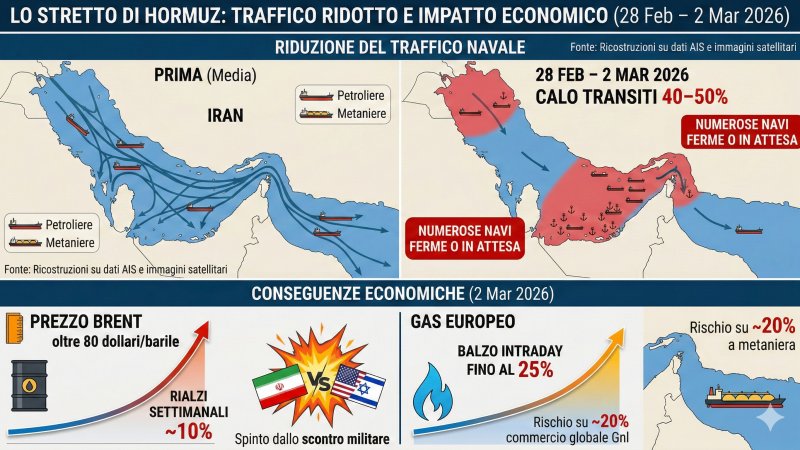


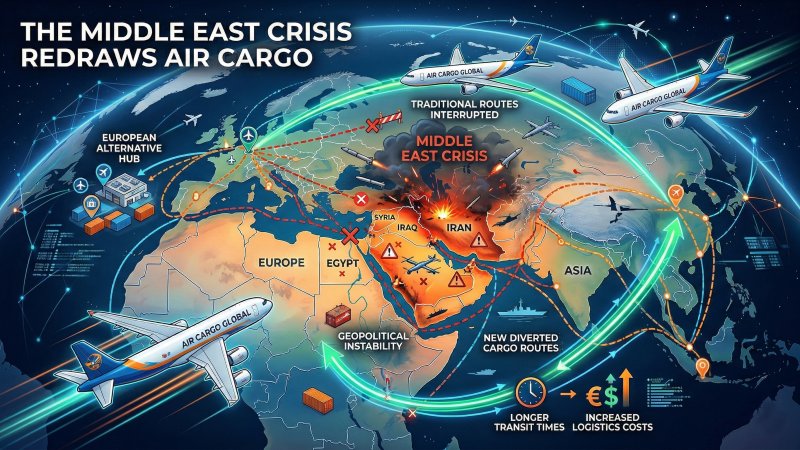





In the Gulf and the Strait of Hormuz, around one hundred container ships, representing almost 10% of the global fleet in the sector, are caught in a bottleneck affecting some 750 vessels of various types. The figure was provided by Jeremy Nixon, chief executive of Ocean Network Express, during the TPM26 conference in Long Beach. The trigger was the strikes by the United States and Israel on targets in Iran and the subsequent Iranian response, including explicit threats against ships transiting the area.
Statements by the Iranian Pasdaran (Islamic Revolutionary Guard Corps) have sharply increased the risk profile for all types of vessels, including container ships. Lloyd’s List reports that transits through the strait fell by 81% in a single day, amounting to an almost complete halt in passages. This is not a formal closure of the maritime corridor, but a de facto blockade driven by operational decisions taken by carriers and by the withdrawal of insurance conditions.
Several marine insurers have suspended cover for voyages through Hormuz, particularly policies linked to war risk and hull damage. Without adequate cover, many carriers would face unsustainable financial and contractual exposure by continuing to transit. As a result, numerous vessels are awaiting instructions or have been ordered to seek safe areas outside the strait.
Major container lines have responded with restrictive measures. Maersk has announced the indefinite suspension of transits through the Strait of Hormuz in order to safeguard crews, vessels and cargo. Other leading carriers, including MSC, CMA CGM and Hapag-Lloyd, have ordered diversions or temporary stops. This collapse in flows affects both ships already near the area and units approaching it, contributing to a build-up of tonnage in the Gulf.
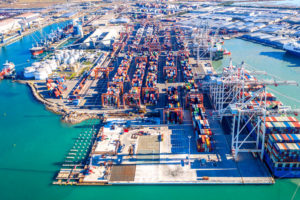
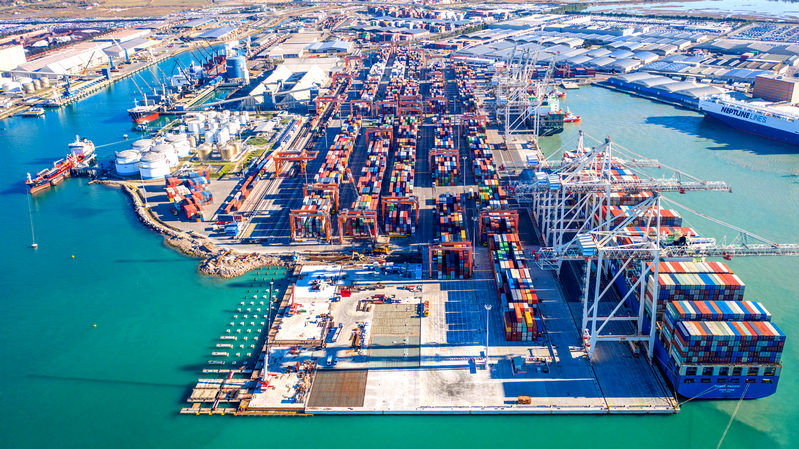
The consequences are first being felt at Gulf ports, starting with Jebel Ali, which faces the risk of blank sailings and container build-ups at terminals. Fewer calls and uncertainty over arrivals may generate landside congestion and misalignment in feeder connections to Oman, Qatar and other countries in the region. For local logistics operators, planning collections, deliveries and the management of empty containers is becoming increasingly difficult.