






Austria is preparing for significant changes to traffic management along the Brenner axis in 2025. Asfinag, responsible for managing Austria's roads, has released the updated calendar of traffic bans for the Lueg Bridge. This measure is part of efforts to coordinate traffic flows as major maintenance works begin on the infrastructure. The calendar is now available on Asfinag’s official website and provides useful information in multiple languages, including English, for transport operators and travellers.
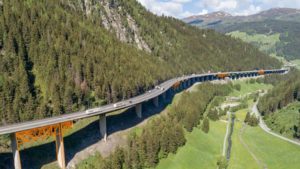
From 1 January 2025, the Lueg Bridge will undergo extensive maintenance work that requires substantial adjustments to traffic arrangements. This strategic section, a vital part of the Brenner A13 motorway, is crucial for commercial and tourist traffic between northern and southern Europe. To minimise disruption, Asfinag has introduced technical and logistical solutions, including maintaining two-lane traffic during peak days. However, the maintenance works and weather conditions are expected to cause severe congestion, making careful planning essential for freight transport operators.
The 2025 calendar introduces several key updates. Two-lane traffic will be ensured on days of high traffic volume, with a total of 180 days allocated for two-lane operations in both directions. Fourteen additional traffic ban days for vehicles over 7.5 tonnes have been added compared to previous years, bringing the total to 36 days of southbound bans and 21 northbound. Additionally, from 1 January, a single-lane configuration with typical construction site layouts has been implemented, while infrastructure works, including the installation of concrete barriers and advanced signalling systems, will progress gradually.
Asfinag has also launched an interactive portal enabling users to monitor real-time travel times and congestion levels, view forecast data and camera feeds, and access information in German, English, and Italian. These tools are designed to support hauliers and travellers in managing their routes, reducing delays and additional costs.
The restrictions and traffic modifications require meticulous planning by transport companies. Winter weather conditions, in particular, pose an additional challenge: in the event of snow on the Brenner Pass, two-lane traffic will be suspended to allow snowploughs to clear the outer lanes. It is anticipated that the first two-lane sections could be operational by late January, weather permitting, while the complete deployment of automated control systems is expected by spring. These enhancements will provide industry operators with advanced tools to manage traffic flows more efficiently.