



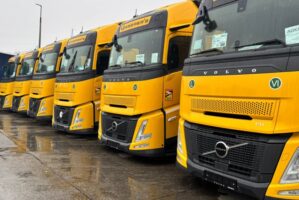
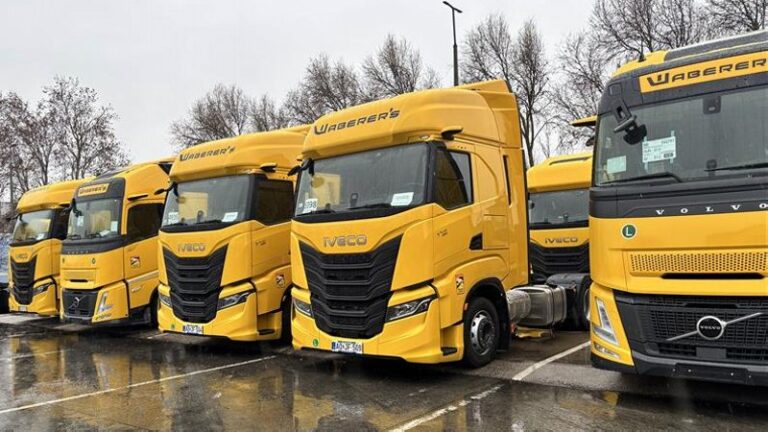
- Waberer’s will replace a total of 925 vehicles in 2026 across its international fleet and Hungarian logistics segment, with an investment of around €57 million. The aim is to further reduce the average age of its vehicles, improve availability and operational continuity, and support the group’s environmental strategy.
- In a European comparison, the average age of trucks in the European Union stands at 13.9 years, according to ACEA (European Automobile Manufacturers’ Association), while Waberer’s international fleet was just over three years old at the end of 2025 and is expected to fall to around two years after the 2026 renewal cycle. This should bring benefits in terms of fuel consumption, emissions and refurbishment costs.
- In 2025, the group reported broadly stable logistics revenues but a marked increase in profitability. In the first nine months, consolidated revenues reached around €603 million, up 5%, while net profit more than doubled to €32.1 million, mainly thanks to the contribution from insurance activities.
In 2026, Waberer’s will continue its multi-year fleet renewal programme, replacing 925 heavy vehicles across international road transport and its logistics segment in Hungary. Planned investment amounts to around €57 million. The objective is to maintain high vehicle availability, ensure service continuity for customers and improve operational efficiency, in line with the group’s environmental strategy. The first deliveries of new vehicles are expected in early May 2026, with the final units entering service by early November. The plan provides for weekly replacements in order to ensure operational stability throughout the year and avoid any impact on transport capacity.
Compared with the wider European market, the group continues to position itself with a relatively young fleet. Against an average age of 13.9 years for heavy vehicles in the European Union, the average age of Waberer’s vehicles used in international transport stood at just over three years at the end of 2025 and is expected to fall towards two years after the 2026 renewal cycle. In parallel, the average age of semi-trailers used in international operations is also expected to decline further.
Fleet renewal is also expected to reduce maintenance costs. According to figures previously released by the company, between 2022 and 2024 the rejuvenation of the fleet reduced breakdowns by 39.15%, while costs related to roadside assistance and repairs fell by 42.56%, from €1.35 million to €776,000.
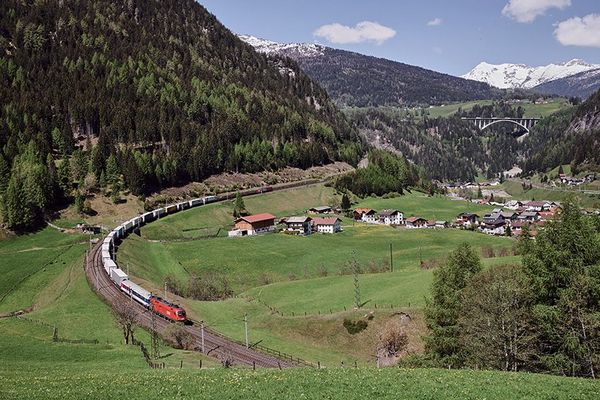
The renewal process is not limited to road transport. From autumn 2026, the group’s Romanian company, active in rail logistics through its subsidiary Psp Group, will lease two newly built interoperable Lema Transmontana electric locomotives, with a total investment of around €6 million over an eight-year period. With a power output of 6,000 kW, the locomotives can haul trains with a gross mass of up to 4,050 tonnes, equivalent to 2,600–2,800 tonnes of payload on flat terrain. On current Central and Eastern European routes, where freight trains range between 1,700 and 2,300 tonnes, a single train can replace the load of around 70–90 lorries. The locomotives will be authorised for use in Romania, Hungary and Slovakia, expanding the group’s intermodal offering.
The 2026 investment plan comes within a 2025 financial year marked by changes in the group’s economic and financial structure. In 2025, Waberer’s reported broadly stable logistics revenues but a marked increase in group profitability, supported by the integration of insurance companies Posta Biztosító and Posta Életbiztosító and favourable exchange rate effects, while the downsizing of the international Link fleet continued.
In the first nine months of 2025, the logistics segment recorded revenues of around €485 million, down 5%. Despite lower revenues, segment EBIT rose slightly to around €14 million, up 2%, supported by development initiatives such as waste logistics, the full consolidation of Mdi, the expansion of third-party warehousing and passenger transport.
Among the main developments in 2025 was the completion and consolidation of the acquisition of Posta Biztosító and Posta Életbiztosító, which significantly expanded the scope of the insurance segment and generated operational and margin synergies. At the same time, the downsizing of the international Link fleet continued, alongside the reorganisation of in-house logistics, leading to lower transported volumes but an improved business mix and overall profitability.
P.R.