




On 11 June 2025, Amazon announced three new AI-driven technologies aimed at making deliveries faster and more reliable. These innovations target three key elements of the logistics chain: accurate recipient location, product demand forecasting and increased autonomy for warehouse robots.
The first of the three innovations is called Wellspring. This advanced mapping system uses generative artificial intelligence to enhance delivery accuracy, particularly in complex urban settings such as multi-storey apartment blocks or newly built neighbourhoods not yet featured on conventional digital maps. Wellspring processes vast amounts of data, including satellite imagery, road networks, building floor plans, customer instructions and historical delivery records. In doing so, it can identify not just the correct address but also the nearest entrance, the most convenient parking spot for the courier, and even the location of the shared mailbox within the building.
In October 2024, Amazon conducted an operational trial of this technology in the United States. During the pilot, Wellspring mapped more than 2.8 million flats across 14,000 residential complexes, also identifying four million optimal drop-off points for parcels. The integration of delivery photos and geolocation data provided a much more detailed and immediate understanding of delivery environments than was previously possible.
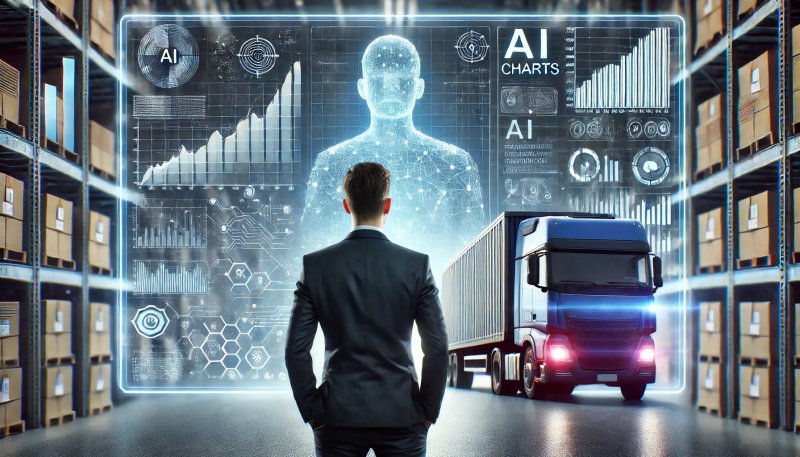
The second innovation focuses on demand forecasting, a critical aspect of timely and efficient logistics. Amazon has developed a new predictive model capable of anticipating not only which products will be in demand, but also where and when. Unlike earlier models that relied largely on sales history, this system also takes into account temporal factors such as weather conditions and holidays. The result is more precise forecasting and better-targeted stock distribution.
Once again, Amazon tested this technology and reports tangible benefits: national forecast accuracy for promotional events increased by ten percent, and regional accuracy rose by twenty percent. This has led to improved product availability, shorter delivery times – sometimes even within the same day – and a reduction in vehicle mileage, contributing to lower emissions. The system is already active in the company’s operational networks in the United States, Canada, Mexico and Brazil, with further market expansion expected soon.
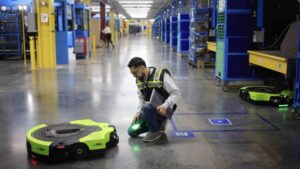
The third pillar of innovation involves robotic automation. A new division within Amazon Robotics is developing agentic capabilities for its robots – systems that can understand natural language, reason and act autonomously based on verbal instructions. Thanks to Vision Language models, it will be possible to give commands such as “pick up all the items in the yellow bin and place them in the grey one” or “load the trailer with all the containers in the loading area”. Robots like Proteus, already in use at Amazon facilities, will thus be able to carry out increasingly complex tasks, freeing human workers from repetitive and physically demanding activities.